Designing for the future
2005 – 2014
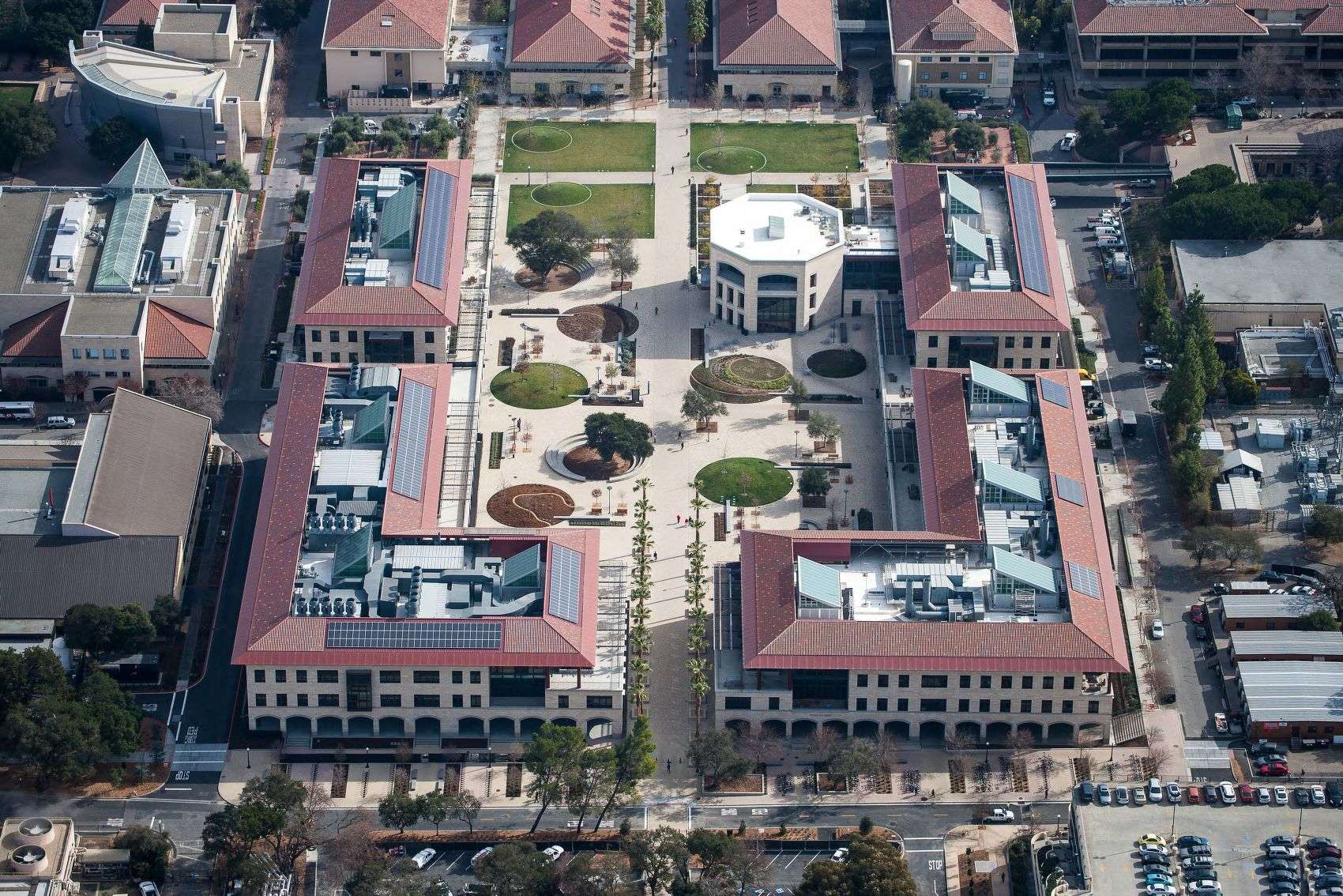
Aerial view of the four completed buildings that made up the new Science and Engineering Quad, facing southeast, 2014. | Todd Quam/School of Engineering.
by Andrew Myers
. . . We are essentially unique in this country—we are essentially unique in the world—for having a great liberal arts university with terrific people and all of the necessary disciplines, and a great engineering school embedded inside
— Dean James Plummer, 2010
2005 – 2014
The fall of 2005 brought a new program to the school and university: the cross-disciplinary Hasso Plattner Institute of Design, dubbed the d.school. The institute embodied Stanford Engineering’s collaborative spirit as it welcomed students from across the university to participate in its innovative offerings. The d.school institutionalized the concept of “design thinking,” championed by world-renowned industrial designer and School of Engineering alumnus and professor of mechanical engineering David Kelley (MS ’78), who became the d.school’s first director.
“David came to my office one day, and he said . . . ‘I think that the concept of how you think about creatively designing things can have a much, much bigger impact on Stanford than just this little pocket of people who we’re educating to design products and companies,’ ” Dean James Plummer recalled. (1) The d.school sought to provide students with tools to solve big, societal challenges. Making air travel more enjoyable, refining ways to minimize drunk driving, and improving K–12 education are but a few examples of problems the d.school took on. The d.school quickly established itself as an ideas factory, famous for classes like “Design for Extreme Affordability,” which targeted innovations at under-resourced communities.
“Design is about meeting human needs,” Kelley said. With a curriculum based on the principle of empathy, students sought to understand the users’ intentions through observation and then pursue rapid, iterative prototyping to design transformative products and services. (2)
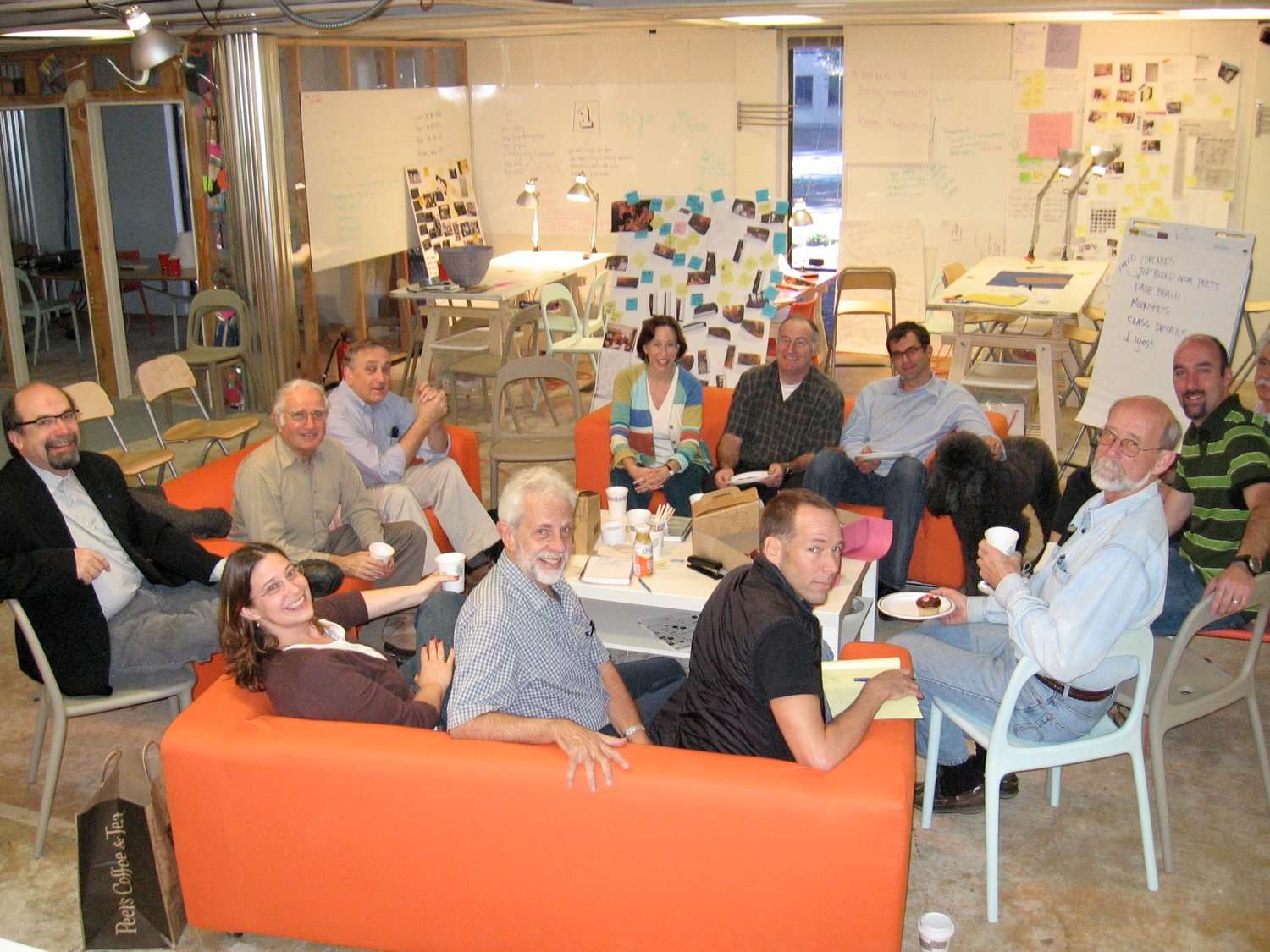
The d.school’s early cohort in 2006 (clockwise from left): David Kelley, Bernard Roth, James Patell, Tina Seelig, Robert Sutton, Alex Kazaks, George Kembel, David Beach, Perry Klebahn, Julian Gorodsky, and Charlotte Burgess-Auburn. | Courtesy d.school.
A new quad takes shape
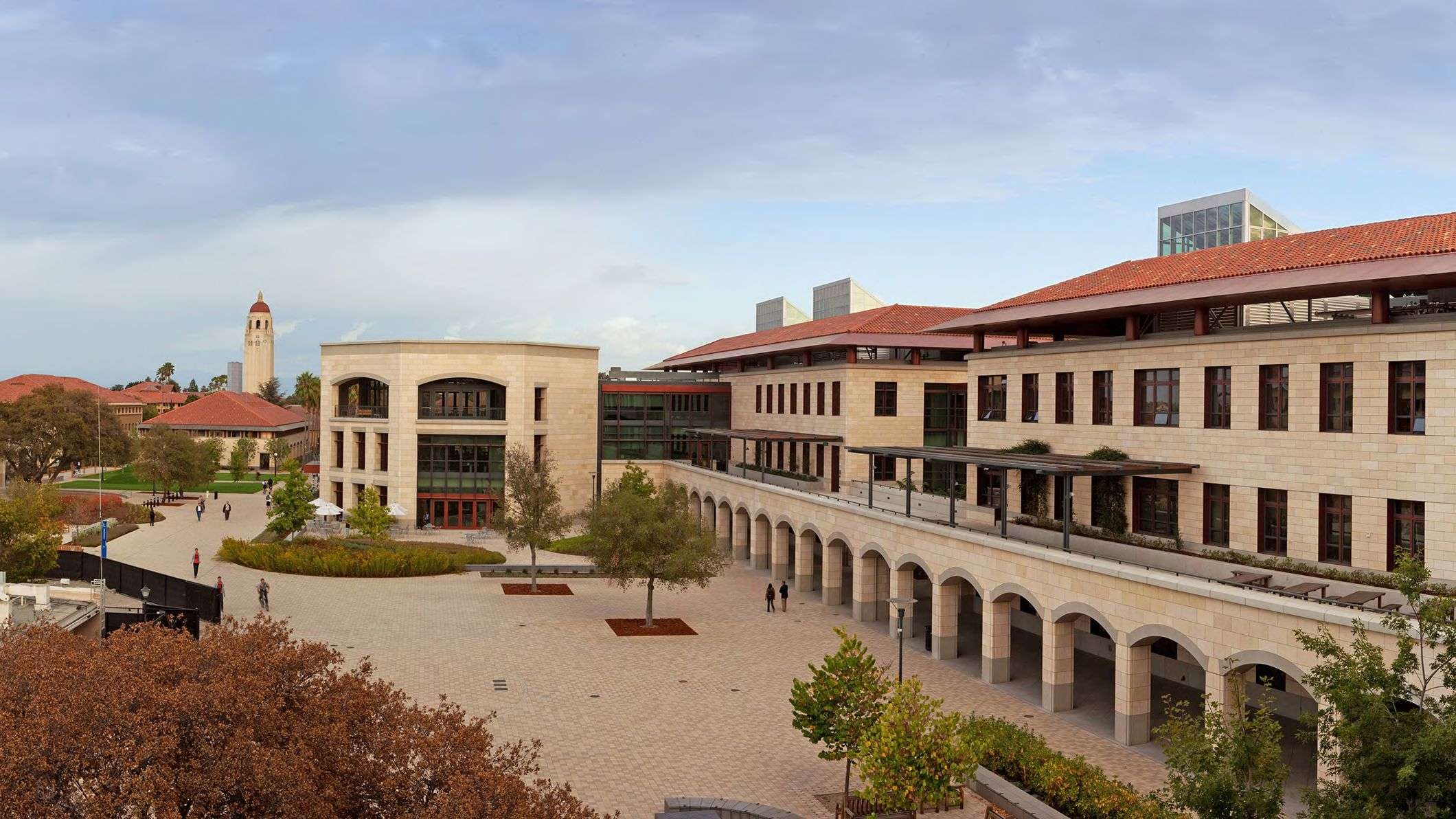
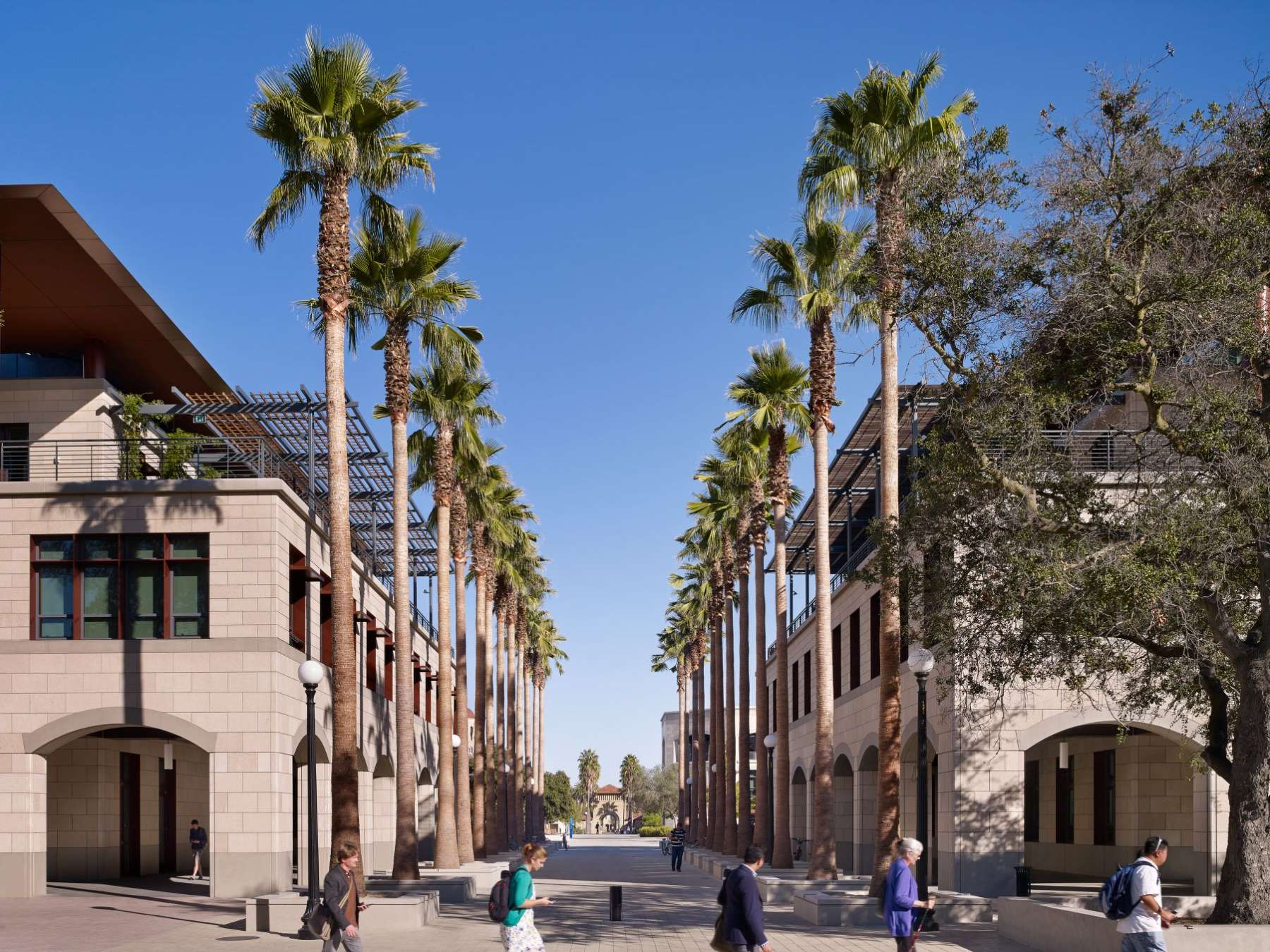
In the early 2000s, after the new buildings of the Near West Campus project had opened in 1999, a new project broke ground to complete the second phase: a new Science and Engineering Quad (SEQ). On an eight-acre section adjacent to the Near West Campus, a patchwork of aging, utilitarian buildings were razed. By 2014, the last four of the quad’s buildings had been completed, with the generous support of named donors as well as a group of anonymous donors known as the Fundamental Partners. Together, the four structures encompassed nearly 620,000 square feet of combined office, teaching, and research space—a grand center for science and engineering.
All four buildings in the new SEQ featured sustainable building techniques, including rapidly renewable construction materials, recycled “gray” water to flush toilets, high-performance windows to make extensive use of daylight and natural ventilation, and active chilled beams. Each of the four buildings in the new SEQ used half the power—and one-tenth the water—of traditional buildings.(3)
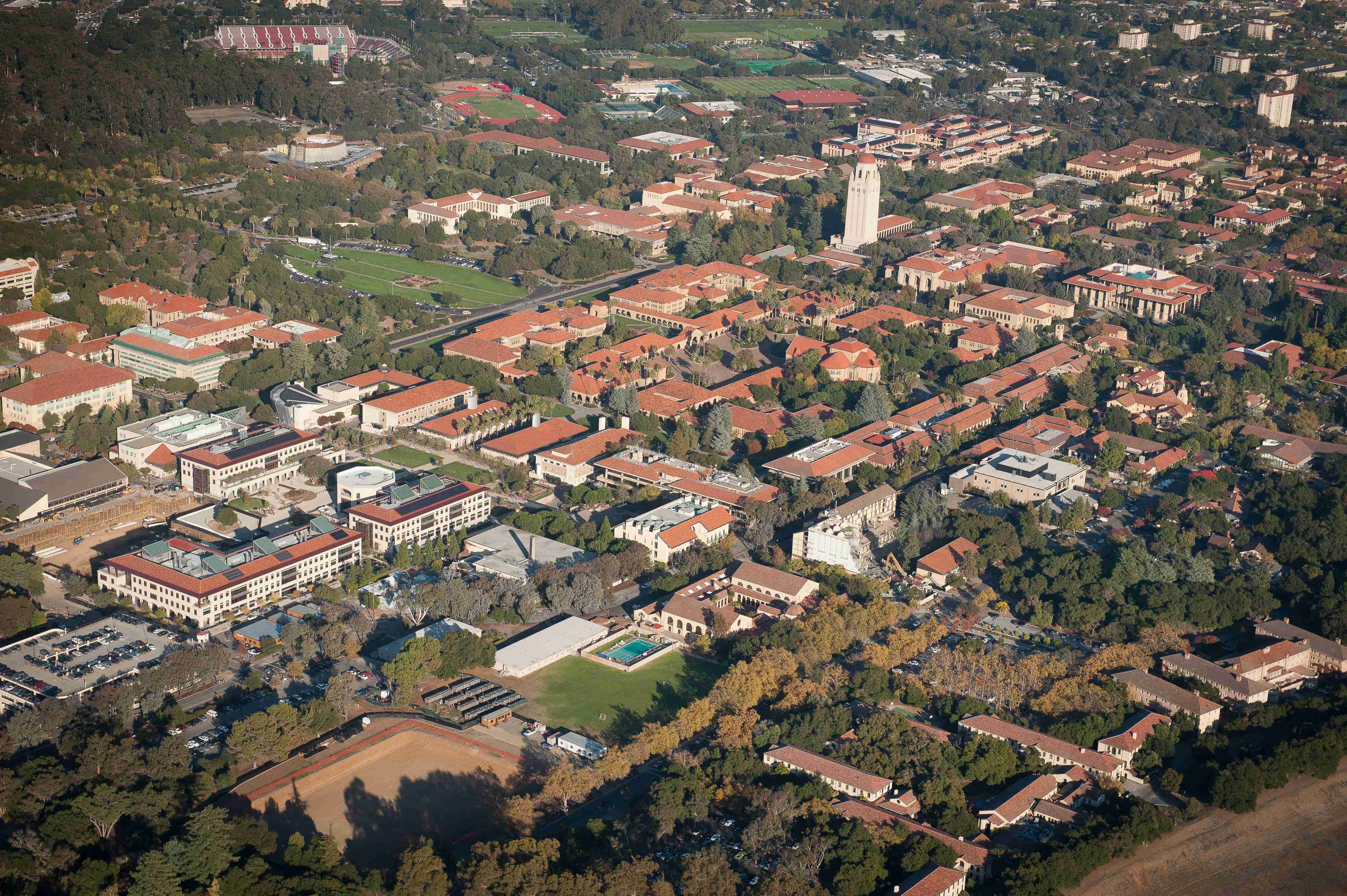
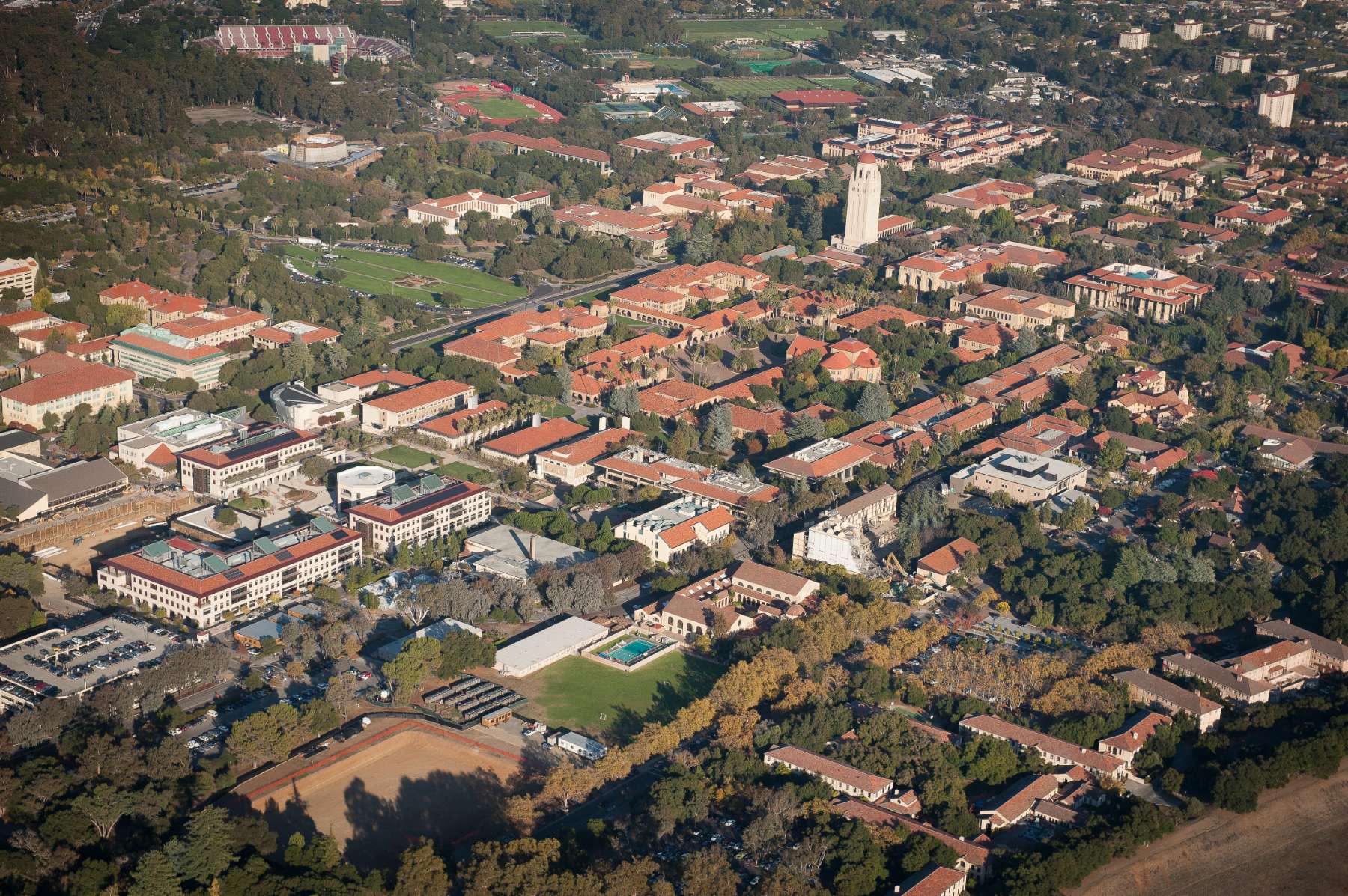
Aerial view of campus facing east, 2011. The new Science and Engineering Quad is visible on the left, with the final building still under construction. Then known as Building 4, that building would later become the Shriram Center for Bioengineering and Chemical Engineering. | Linda A. Cicero/Stanford News Service.
2008
Sustainable innovation hub: The Jerry Yang and Akiko Yamazaki Environment and Energy Building (Y2E2) opens its doors to tackle climate change
In early 2008, this new era for the School of Engineering commenced with the dedication of the Jerry Yang and Akiko Yamazaki Environment and Energy Building. Nicknamed Y2E2, the new building was eight years in the making and was made possible by a $50 million gift from the husband-and-wife alumni team of Jerry Yang (’90), cofounder of Yahoo!, and Akiko Yamazaki (’90). Gathered under its roof were primarily engineers, but also an assortment of ecologists, economists, biologists, legal scholars, earth scientists, and policy experts whose goal was to make the world a more sustainable place. “The complexity of today’s global environmental questions requires that experts from a variety of fields come together to address different facets of the same problem,” Yamazaki said. “For our children to be able to enjoy and experience what we’ve been blessed with, we cannot afford not to do something today.”(4)
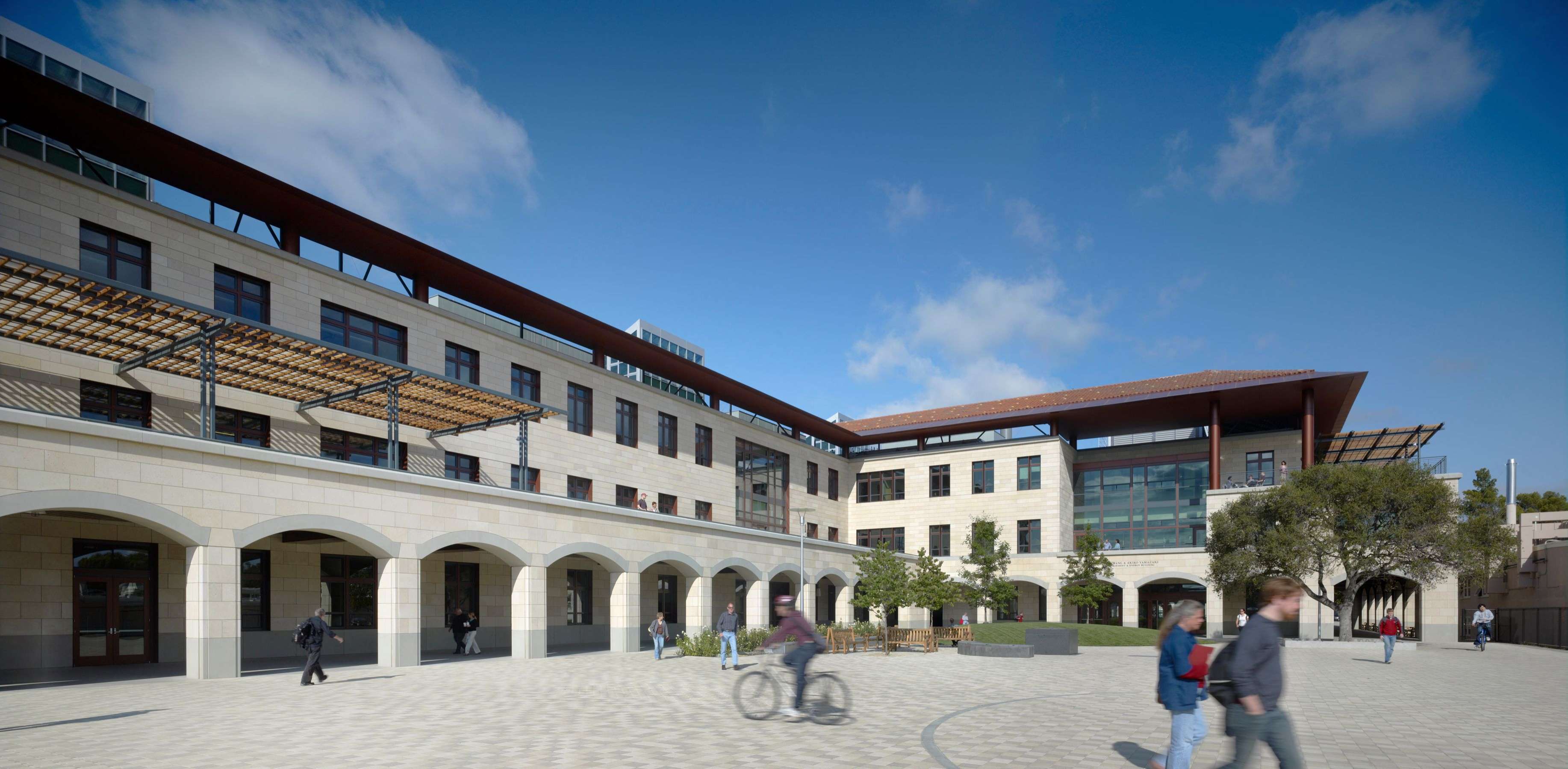
Exterior of the Jerry Yang and Akiko Yamazaki Environment and Energy Building (Y2E2). Dedicated in 2008, Y2E2 became the first of the four buildings that composed the new Science and Engineering Quad. Named in honor of a gift from Jerry Yang (’90), cofounder of Yahoo!, and Akiko Yamazaki (’90), the building houses departments and institutes focused on studying and developing solutions for sustainability challenges, particularly climate change. | Tim Griffith/School of Engineering.
2010
Engineering excellence: Unveiling the James and Anna Marie Spilker Building—a hub for applied science and innovation
Next up was the James and Anna Marie Spilker Engineering and Applied Science Building, which opened in September 2010. James Spilker, a consulting professor at Stanford and a principal contributor to the original Global Positioning System (GPS), had pioneered work in signal design to enable precise tracking of satellites, which had a profound impact on communications and technology. His wife, Anna Marie, was an economist and Bay Area real estate investor. The Spilker Building became a noted center for nanoscale science and engineering. The following month, the Jen-Hsun Huang Engineering Center was dedicated as well. The Science and Engineering Quad was now three-quarters complete.
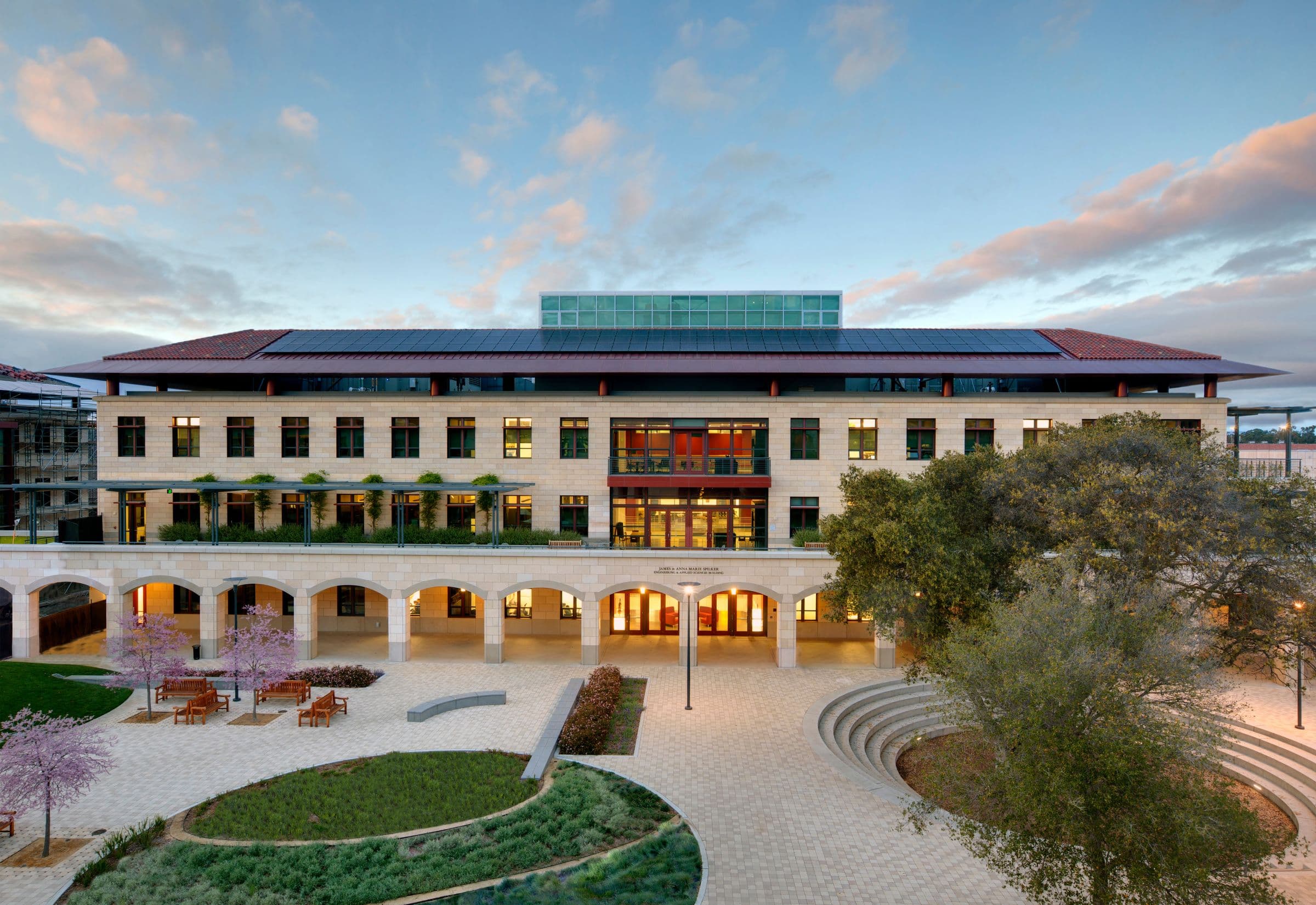
Exterior view of the James and Anna Marie Spilker Engineering and Applied Science Building. Opening in 2010, the 100,000-square-foot Spilker Building was the second of the four Science and Engineering Quad buildings to be completed. When it opened, it housed the independent E. L. Ginzton Laboratory, offices for the Department of Applied Physics, and nanoscale facilities. | Joel Simon/Stanford Engineering.
2010
Engineering leadership: The Jen-Hsun Huang Engineering Center opens as a hub for innovation and collaboration at Stanford
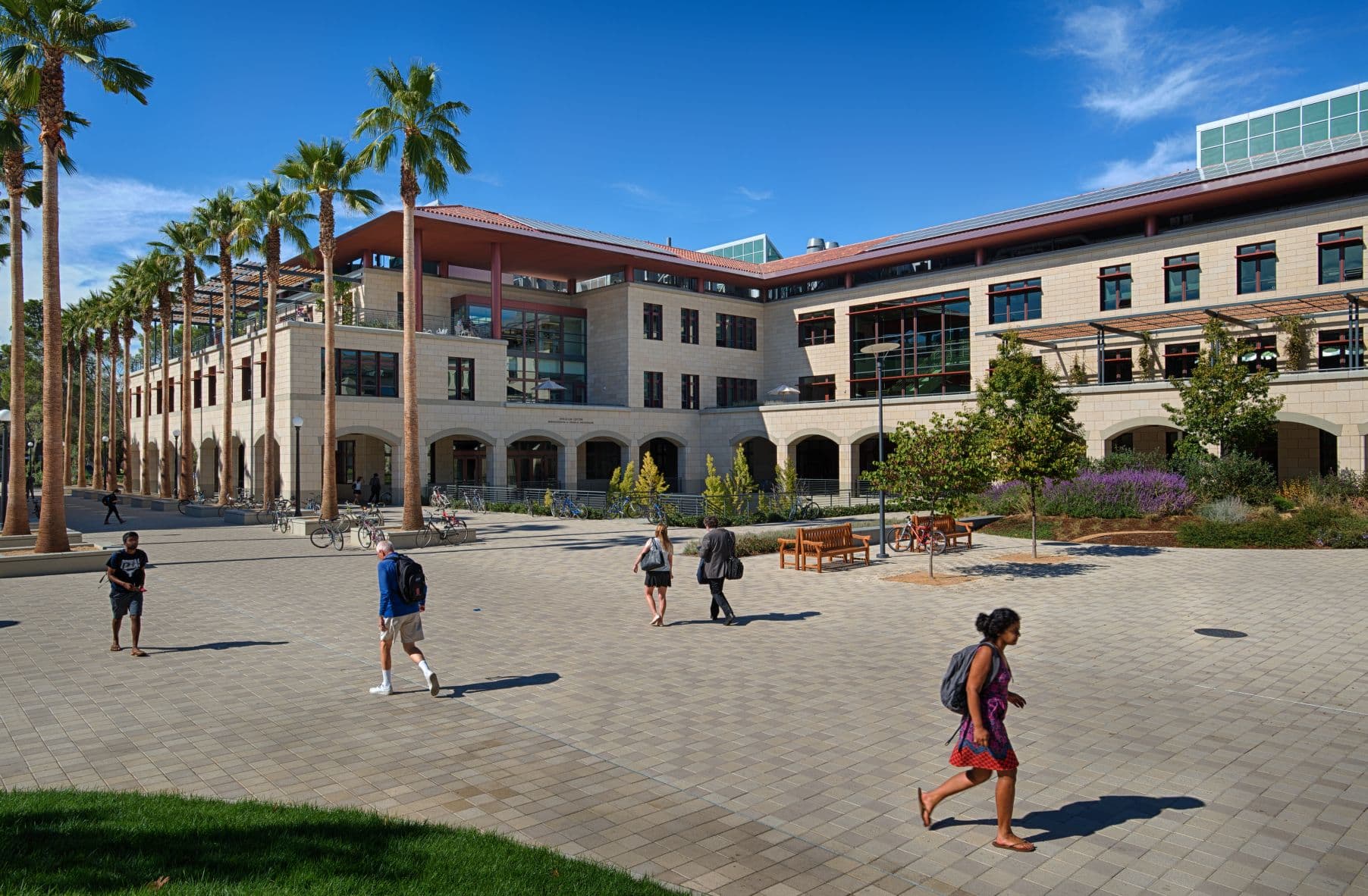
The Huang Center, boasting 130,000 square feet, became the headquarters of Stanford Engineering, home to the dean’s suite, offices, classrooms, a conference center, machine shops, a café, and the new Frederick Emmons Terman Engineering Library. The Huang Center was named for alumnus and Nvidia cofounder Jen-Hsun “Jensen” Huang (MS ’92 electrical engineering), who, with his wife, Lori, pledged the $30 million gift that made the building possible.
“To build a better future we must invest in tomorrow’s innovators,” Huang said. “There is no better place to do this than Stanford. . . . I hope that students will find inspiration here, and that Stanford will be as important in shaping their lives as it has been in mine.”(5)
I hope that students will find inspiration here, and that Stanford will be as important in shaping their lives as it has been in mine.
— Jen-Hsun Huang
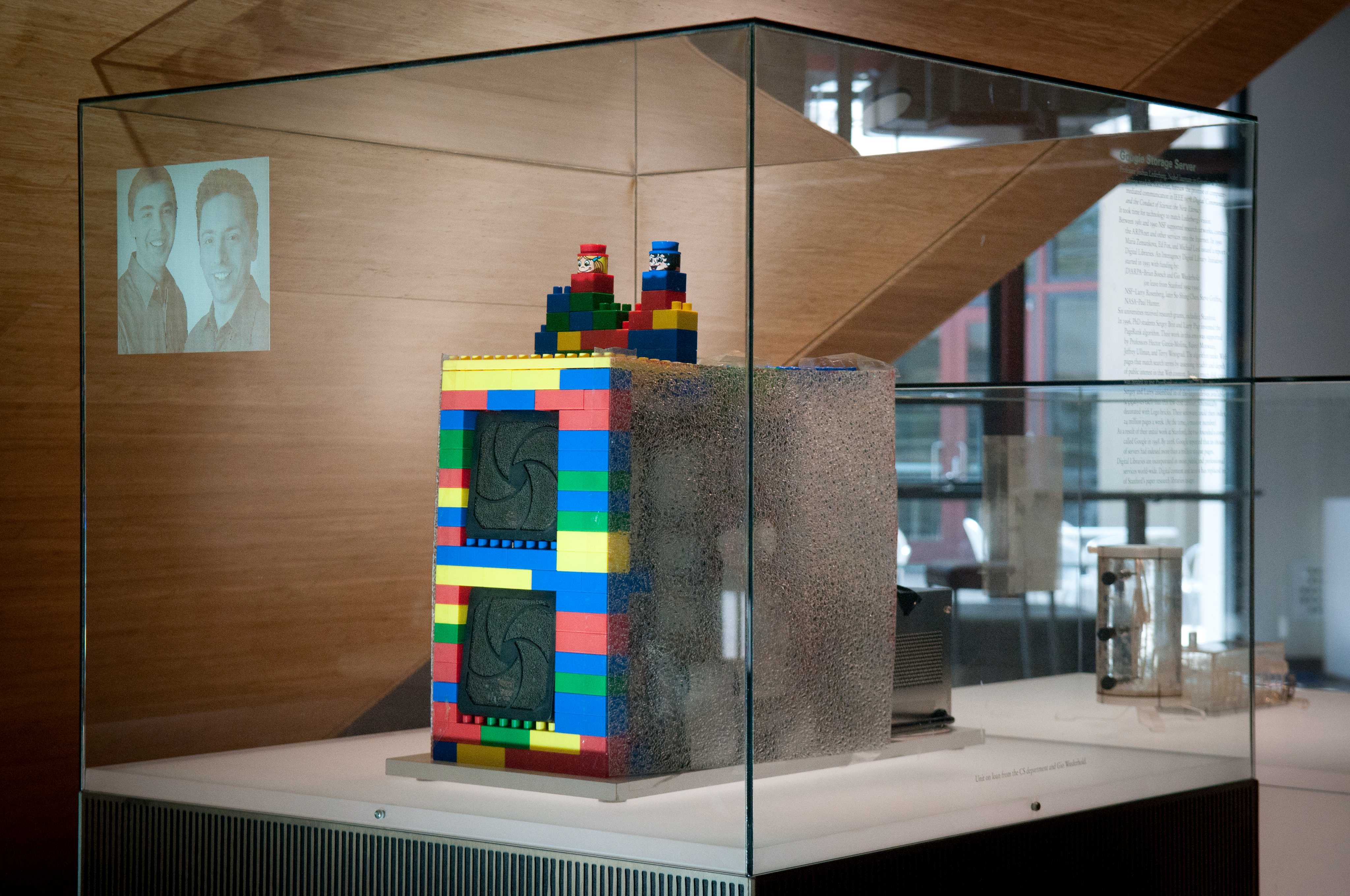
In tribute to that history, the Huang Center included several memorial “Engineering Touchstones” throughout: the original servers that Yahoo! founders Jerry Yang (who became chair of Stanford University’s Board of Trustees in 2021) and David Filo had used to categorize Web pages; toy-block-framed servers assembled by Google founders Sergey Brin and Larry Page to index the Internet; copies of Donald Knuth’s seminal book series The Art of Computer Programming; models of Perry McCarty’s anaerobic bioreactor; early examples of nanocharacterization; and an artful display of many of the hand-carved wooden propellers William Durand had used to test designs.
Exterior view of the Jen-Hsun Huang Engineering Center. The Huang Center opened in 2010 as the administrative headquarters for the School of Engineering. Its 130,000 square feet contain the dean’s suite, offices, classrooms, a conference center, a library, and a café. It also exhibits displays of major Stanford Engineering milestones, including the original Yahoo! servers. | Tim Griffith/School of Engineering.
2014
Scientific advancement: The Shriram Center for Bioengineering and Chemical Engineering opens its doors, completing Stanford’s Science and Engineering Quad
The fourth and final building, the Shriram Center for Bioengineering and Chemical Engineering, opened its doors in 2014. It bore the names of university trustee Kavitark “Ram” Shriram and his wife, Vidjealatchoumy “Vijay” Shriram, who made a $61 million gift in support of the project. At more than 208,000 square feet of space, the Shriram Center was the largest of the four structures in the Science and Engineering Quad. The building provided a consolidated home for the Departments of Chemical Engineering and Bioengineering, which had been previously spread among several buildings on campus.
“One of the major trends in bioengineering . . . has been the move toward molecular-level engineering,” said Russ Altman, professor and then-chair of bioengineering. “Our colleagues in chemical engineering have been thinking at this level for several decades, so the interface between chemical engineering and biological engineering will create opportunities at the biochemical engineering and chemical biology frontier that should be very exciting.”(6)
Exterior views of the Shriram Center for Bioengineering and Chemical Engineering, named after a gift from university trustee Kavitark “Ram” Shriram and his wife, Vidjealatchoumy “Vijay” Shriram. Opening in 2014, the Shriram Building completed the final phase of the new Science and Engineering Quad. Its 208,000 square feet house the Departments of Chemical Engineering and Bioengineering, along with teaching space and labs. | Tim Maloney/School of Engineering.
The design of all four buildings was also carefully choreographed to foster chance encounters among disparate academic disciplines in hopes that uncommon collaborations might result. Referring to the Shriram Building’s “connectivity,” Curtis W. Frank, a chemical engineer and chair of the faculty committee overseeing design, noted the sightlines of the central staircase, the intentional north-south, east-west orientation of the building’s two hallways, and the extensive use of glass throughout the building. “This will promote the chance encounters that can lead to sparks of inspiration,” Frank said. (7)
And yet, even as the Science and Engineering Quad neared completion, a reminder of the past was coming down. The Terman Engineering Center, built in the 1970s, was deconstructed and its materials upcycled into other projects on campus. The School of Engineering turned its site into a park, preserving a modified version of the fountain that had previously saluted the Terman Building. (8)
MOOC’s moment
In 2008, the School of Engineering began a bold experiment in universal education, offering materials from several of its most popular classes in computer science and electrical engineering for free, online. The pilot was known as Stanford Engineering Everywhere (SEE). SEE differed from similar programs at other major technical universities in that it provided full course content. “It has everything you need, [including all] the lecture notes and videos,” SEE program director Andy DiPaolo said. (9)
A few years later, Stanford would innovate yet again when it became the first university to offer what became known as massive open online courses (MOOCs). In the fall of 2011, three Stanford classes were made available worldwide for free. MOOCs went beyond self-serve materials to provide synchronous classes that involved lively discussion forums in which students could help one another. Enrollees watched recorded lectures online, did machine-graded homework, and earned a “Statement of Accomplishment” for passing the class. (10)
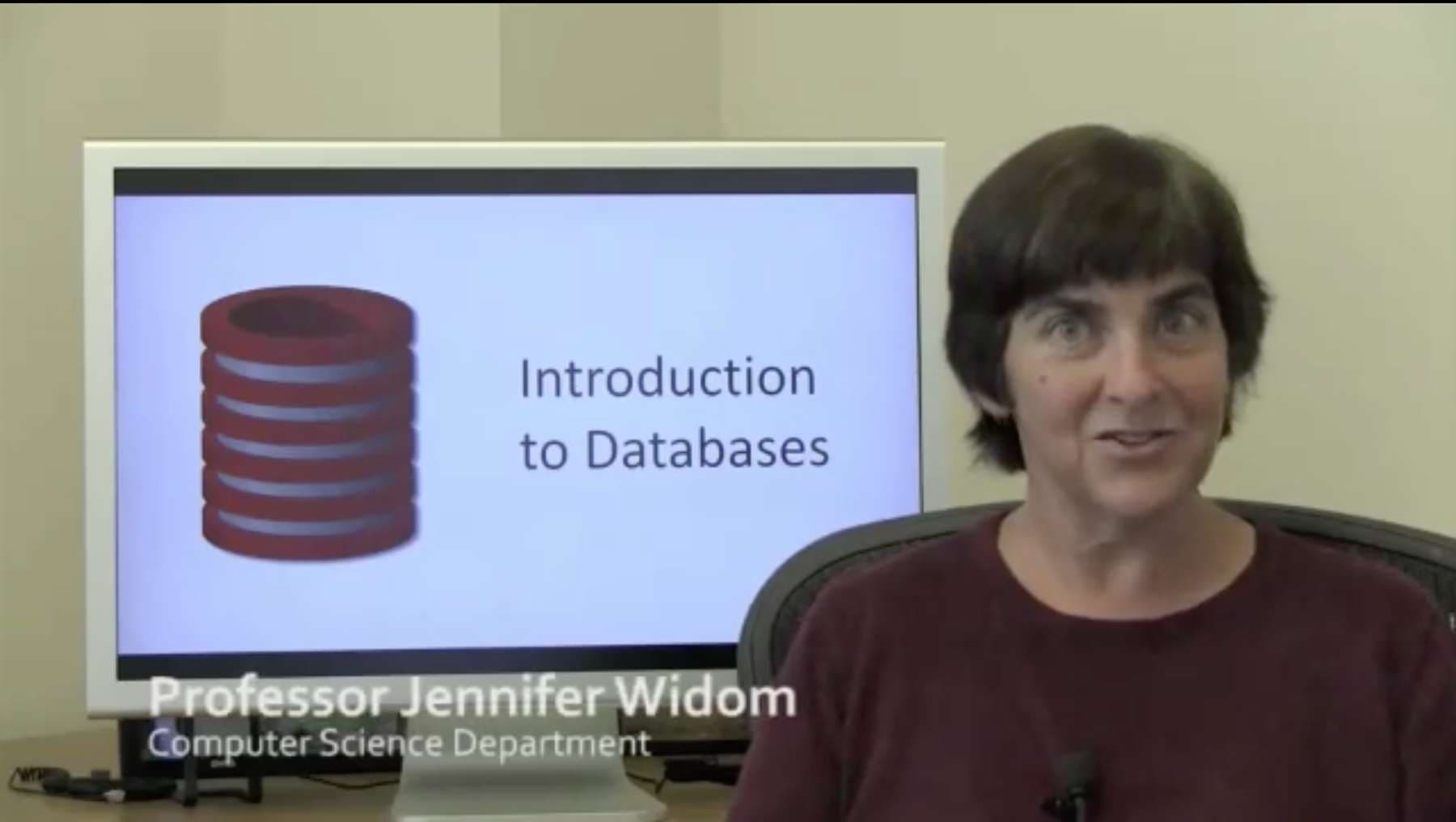
Though online education itself was not new, in 2011 the technology took a leap by which tens of thousands of students could enroll in courses taught by Stanford computer science faculty, including Andrew Ng, Sebastian Thrun—who was credited with launching the MOOC idea—and future dean Jennifer Widom. (11)
Ng’s machine learning course and Widom’s database course were hosted on a software platform built by Stanford students. Together with these students, Ng and Daphne Koller, fellow professor of computer science, developed the platform into a start-up company called Coursera that is still in business today. (12) Simultaneously, Sebastian Thrun cofounded the online educational company Udacity, which initially offered MOOCs and later shifted to offer vocational courses for professionals.
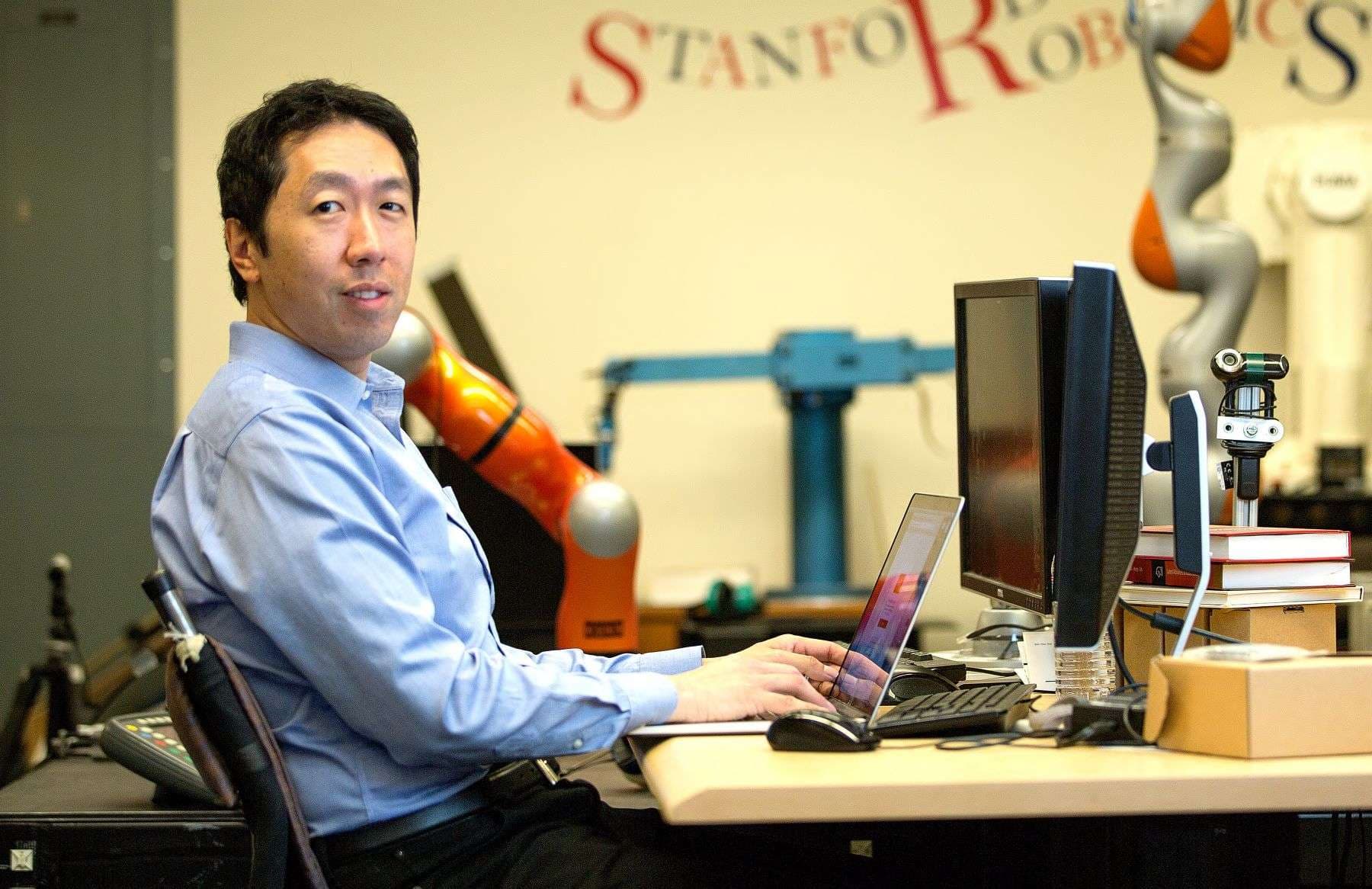
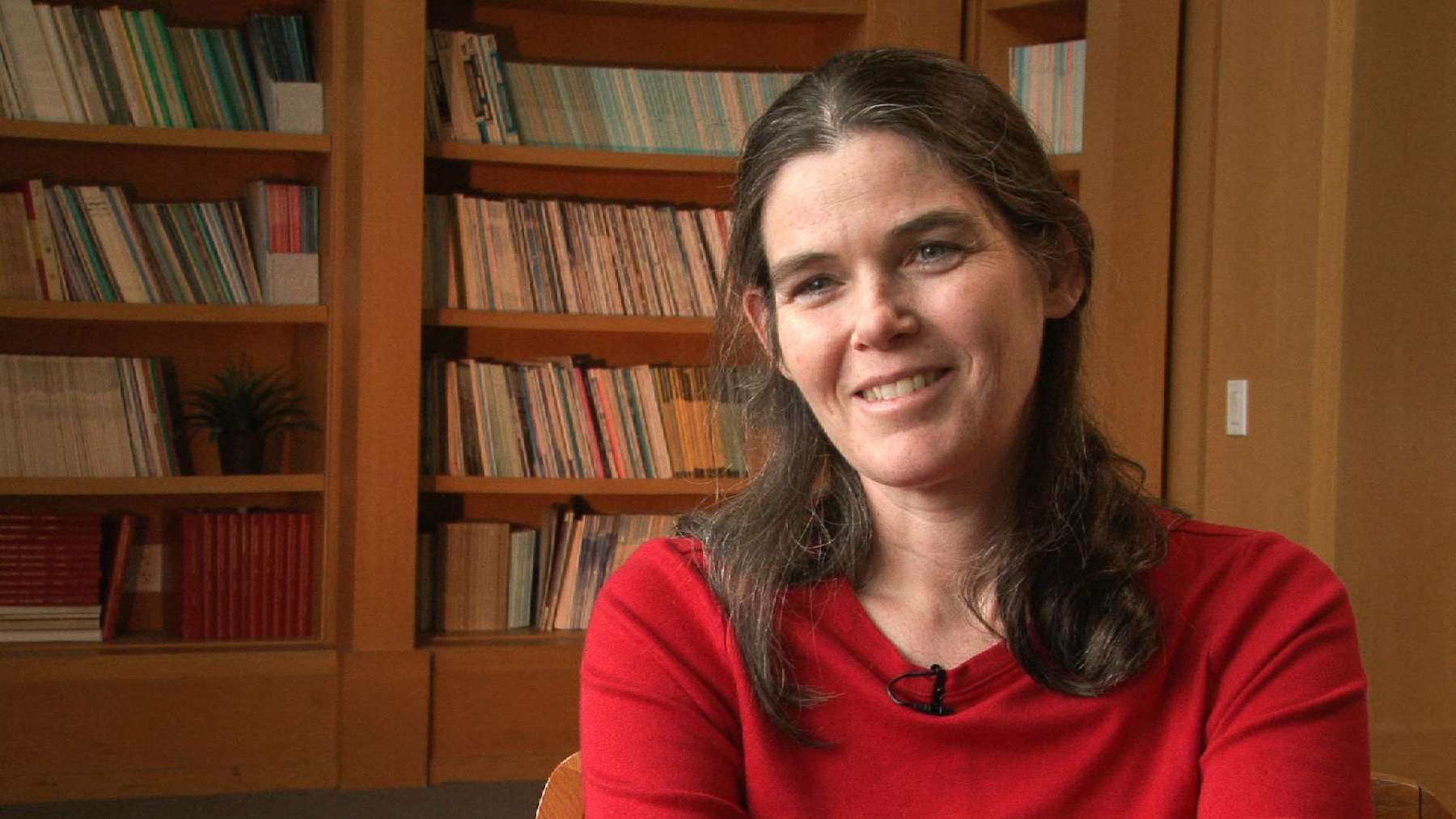
Andrew Ng (left) and Daphne Koller (above), cofounders of Coursera, 2014 and 2011. Originally developed by students as a platform to run Stanford’s massive open online courses (MOOCs), Coursera became a popular platform for delivering thousands of university courses and degrees to people worldwide. | Ng photo: Norbert von der Groeben/School of Engineering; Koller photo: Linda A. Cicero/Stanford News Service.
Economic woes weigh
Despite decades of success, in the wake of a global financial crisis in late 2008, the School of Engineering was pressed into significant reductions of staff and programming for 2009. Dean Plummer announced a reduction of $9.6 million to the base operating budget, and cuts to departmental expenditures by 14 percent each.
Certain other commitments, however, Plummer declared off limits. “We are committed to completing the key capital projects underway,” he added, mentioning a new automotive innovation facility and the renovation of the Thomas F. Peterson Engineering Laboratory for the d.school. (13)
Amid the worst financial crisis since the Great Depression, the popularity of engineering programs remained high across campus and continued to grow. In the 2008–2009 academic year, one in five undergraduates earned degrees in engineering disciplines. By 2013, just five years later, the fraction of undergraduates majoring in engineering disciplines had increased to 38 percent. Numbers were high at the graduate level as well, with more than 40 percent of all graduate degrees for the entire university being granted in engineering programs. (14)
Computer science was a major driver of the undergraduate increase. With a complete overhaul in 2009, the computer science curriculum was reshaped to be more welcoming and interdisciplinary in order to appeal to a broader cross section of students. In a matter of two years, computer science saw an 83 percent increase in enrollment; it soon became the most popular undergraduate major.(15)
Despite that impressive growth, computer science had difficulty attracting female students. In 2012, only slightly more than one in five undergraduate computer science majors were women. “[The problem] starts earlier than college,” said Widom, then chair of the Department of Computer Science, noting that the discrepancy was evident in America’s high schools as well. Outreach efforts to rectify the problem included biquarterly dinners for women in computer science organized by the campus group She++. (16) By the end of 2024, the number of women enrolled in computer science at the graduate level had increased to 34 percent and undergraduate enrollment by women reached 36 percent. Overall, roughly one in five of all Stanford undergraduate seniors in 2024 were earning a degree in computer science.
Fab, Meet Fabless: How Two Stanford Engineering Alumni Built a Collaboration on Shared Values
Over many decades, Stanford Engineering has helped shape the global semiconductor landscape. Some of that work occurred on campus—for example, in 1958, when young assistant professor James Gibbons, working part-time at Shockley Semiconductor, and his Stanford colleagues produced the first semiconductor device created in a university lab. And some happened off campus, such as when two Stanford Engineering alumni spoke by phone in the mid-1990s and kicked off one of the most influential collaborations in modern history.
Morris Chang (PhD ’64) founded the Taiwan Semiconductor Manufacturing Company (TSMC) in 1987, pioneering the dedicated semiconductor foundry business model and going on to build some of the world’s most advanced silicon chips for companies all over the world. Six years later, in 1993, Jen-Hsun “Jensen” Huang (MS ’92) cofounded Nvidia to design graphics processing units (GPUs) for gaming and professional markets.
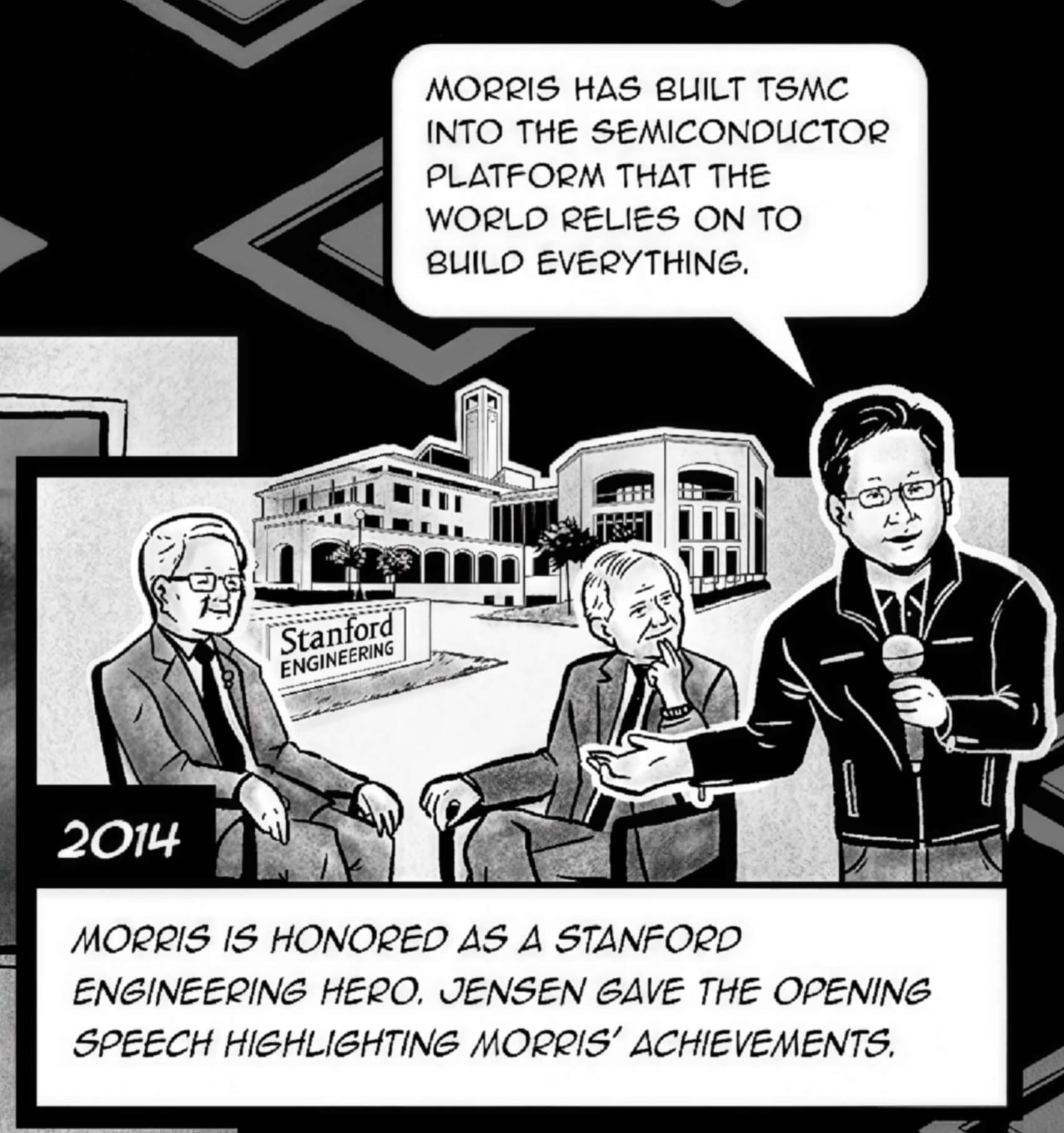
A drawing of (left to right) Morris Chang, John Hennessy, and Jensen Huang at the event recognizing Chang as a Stanford Engineering “Hero” in April 2014. The panel is from the artist-rendered timeline of the collaboration and friendship between Morris Chang and Jensen Huang. | Courtesy Morris Chang.
Huang had phoned TSMC in 1993, (17) when his small, “fabless” company was looking to outsource manufacturing to an established “fab.” But the connection was made only after Huang personally wrote to Chang a few years later, and Chang called him directly. TSMC soon began manufacturing Nvidia’s first two successful chips. The collaboration was off and running—and so was the friendship.
What struck Huang when he first visited Chang at TSMC was that, instead of emphasizing the company’s capabilities—which were many—Chang focused on two core values: trust and integrity. (18)
As the two men grew to know each other over the years, their mutual respect only increased. Chang stopped in to see Huang at Nvidia’s campus in Sunnyvale, California, while honeymooning with his wife, Sophie, in 2001. There was always business to discuss—Nvidia’s need for a high volume of chips, and Huang’s expectation that 3D graphics would be the driving force of the computer industry. The personal connection grew with each visit.
In 2001, Huang’s gift to Chang on his seventieth birthday described the TSMC founder as “a wise explorer, discovering a path forward, leading the way.” (19) Chang had dinner at the Huang family home, and later, Huang celebrated his fiftieth birthday with Chang and Sophie at their home in Taiwan. As a gift, Huang was invited to select from a series of paintings Sophie herself had created.
The next year, in 2014, when Morris Chang was honored as a Stanford Engineering “Hero,” Huang was there to share personal remarks highlighting Chang’s achievements, his enduring values, and his unparalleled impact. The event took place in the Nvidia Auditorium in the Jen-Hsun Huang Engineering Center— the new headquarters for the School of Engineering made possible by a generous gift from Jensen and Lori Huang. (20)
More recently, when it was time for an upgrade of the Stanford Nanofabrication Facility—which had its distant roots in Gibbons’s early lab— TSMC’s generous commitment of funds and on-site scientific collaborators helped to ensure that the facility would remain at the forefront of chip research and innovation. (21)
In an artist-rendered timeline of their collaboration and friendship that Huang commissioned for Chang in 2018, Huang described working with Chang as “one of the great joys of my career.” The timeline hangs on a wall inside Morris and Sophie Chang’s office in Taipei.
—Julie Greicius
A new breed of engineer
At a faculty senate meeting in 2010, Dean Plummer laid out a case for what set the Stanford School of Engineering apart from other technical schools around the world. He described the great challenges of twenty-first-century scholarship as “largely interdisciplinary,” requiring engineering’s collaboration with medicine, business, and other parts of the university.
“The truth,” Plummer said, “is that Stanford has an unbelievably unique opportunity to be dominant in these areas because we are essentially unique in this country—we are essentially unique in the world—for having a great liberal arts university with terrific people and all of the necessary disciplines, and a great engineering school embedded inside.” Plummer went on to describe the new breed of engineer he believed Stanford would produce: innovators who blended deep technical knowledge and skills with an artist’s breadth and taste. This combination of tradition and innovation would be necessary for Stanford to remain a top engineering program. (22)
Speaking at the Huang Building dedication later that year, Plummer expanded on these ideas: “Engineers in the 21st century must be able to work across disciplines and must have breadth so that they can excel in areas including teamwork, communications, entrepreneurship and design. They also must be able to navigate in a global economy and across cultures.” (23)
Research breakthroughs
Even in the school’s storied history, the ninth decade at the Stanford School of Engineering was a notable period of research. In October 2005, Sebastian Thrun (whose accomplishments in online education were still to come) and the Stanford Racing Team made global headlines when “Stanley,” a driverless Volkswagen the team had designed and built, won the $2 million 2005 DARPA Grand Challenge contest for autonomous vehicles.
Stanley employed GPS, radar, cameras, and other features to sense its surroundings and skirt obstacles, completing a 132-mile course through the Mojave Desert in just under seven hours—a remarkable feat. The previous year, no cars had even come close to completing the 150-mile course. Most had failed within the first mile or two, and even the most successful made it only past the seventh mile. (24)
“Cars will eventually drive themselves,” Thrun said, predicting a day he then thought might be fifty years off. “We’re at a point in time similar to the first flight. No one thought it was possible. Challenging things can be done. . . . This is a very exciting time.” (25)
“Cars will eventually drive themselves. . . We’re at a point in time similar to the first flight. No one thought it was possible.
— Sebastian Thrun
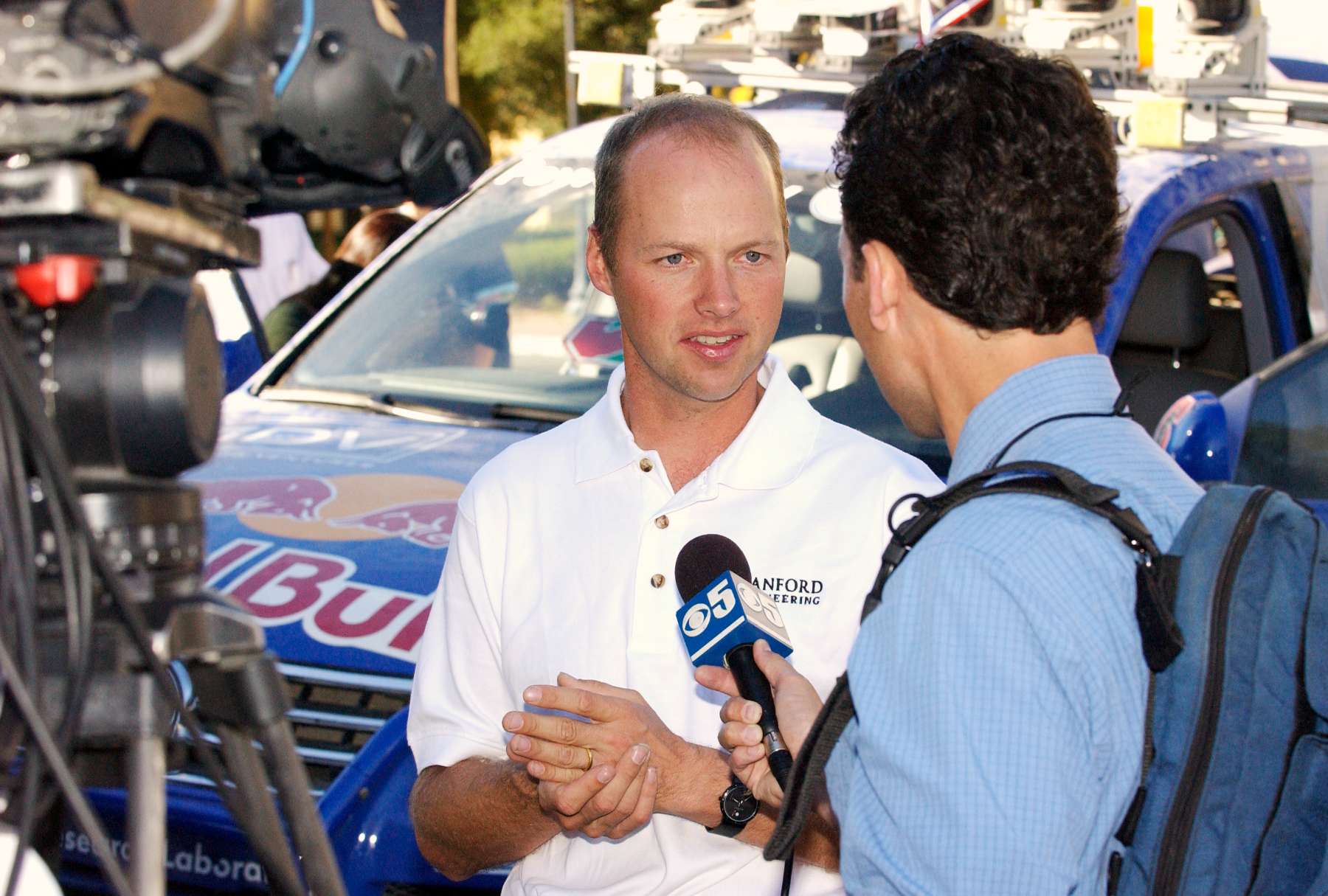
Sebastian Thrun, 2005. Along with the Stanford Racing Team, Thrun developed a driverless Volkswagen named Stanley that won an autonomous vehicle contest held by DARPA. The contest required participants to navigate a 132-mile course through the Mojave Desert in no more than 10 hours—Stanley finished in just under seven. | Linda A. Cicero/Stanford News Service.
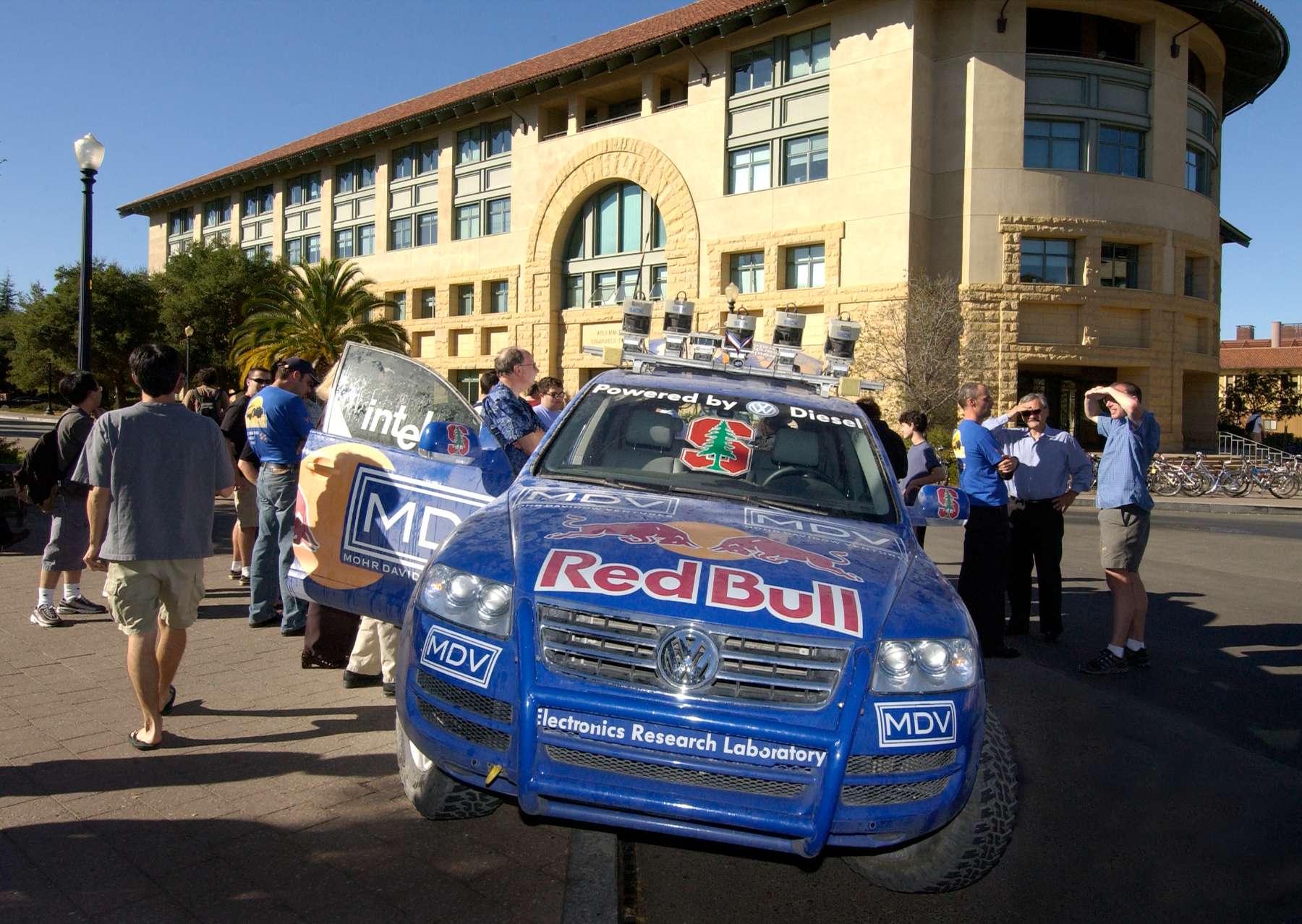
The Stanford Racing Team’s autonomous robotic car, Stanley, in front of the William Gates Computer Science Building, 2005. Significant advances that enabled Stanley’s success included improved long-range terrain perception, real-time collision avoidance, and stable vehicle control on slippery and rugged terrain. | Linda A. Cicero/Stanford News Service.
In 2005, bioengineer and psychiatrist Karl Deisseroth published his first paper on optogenetics, demonstrating the ability to turn genetically modified neurons on and off with light. The transformational technique allowed scientists to study brain circuitry as never before. It became a fundamental tool for biological research across numerous disciplines and garnered a multitude of international awards. In 2010, optogenetics was named “Method of the Year” by Nature Methods and was listed among the “Breakthroughs of the Decade” in Science magazine. In 2013, Deisseroth would go on to introduce the CLARITY technique, further revolutionizing neuroscience by enabling detailed visualization of intact brain structures and molecular processes. (26)
Remarkable breakthroughs from Stanford Engineering faculty didn’t stop there. In 2006, electrical engineer Krishna Shenoy and his longtime collaborator, Stanford neurosurgeon Jaimie Henderson, and their team developed a high-performance brain-computer interface system that could translate neural signals from paralyzed patients into real-time control of a computer cursor and, later, enable them to “type” with their thoughts. An adaptive algorithm could adjust to changes in neural signal patterns over time, allowing for better control. (27)
Electrical engineer Teresa Meng collaborated with Shenoy on neural interfaces. She also advanced low-power digital circuit design and played a key role in developing Wi-Fi technology. Her colleague in electrical engineering, Andrea Goldsmith, made significant contributions to the theoretical foundations of wireless communications, particularly through her work on multiple-input, multiple-output (MIMO) systems and capacity limits of wireless channels, which advanced modern communication technologies like 4G and 5G wireless.
Women were making strides in other engineering disciplines, too. In the Department of Management Science and Engineering, Margaret Brandeau devised a mathematical model for optimally allocating resources among HIV prevention strategies in sub-Saharan Africa, helping policymakers maximize the impact of limited public health resources. In 2011, Jennifer Dionne’s work in materials science and engineering showed how light-based techniques could be used to grab and move nanoparticles in liquid, advancing approaches for detecting diseases and creating advanced microscopic devices.
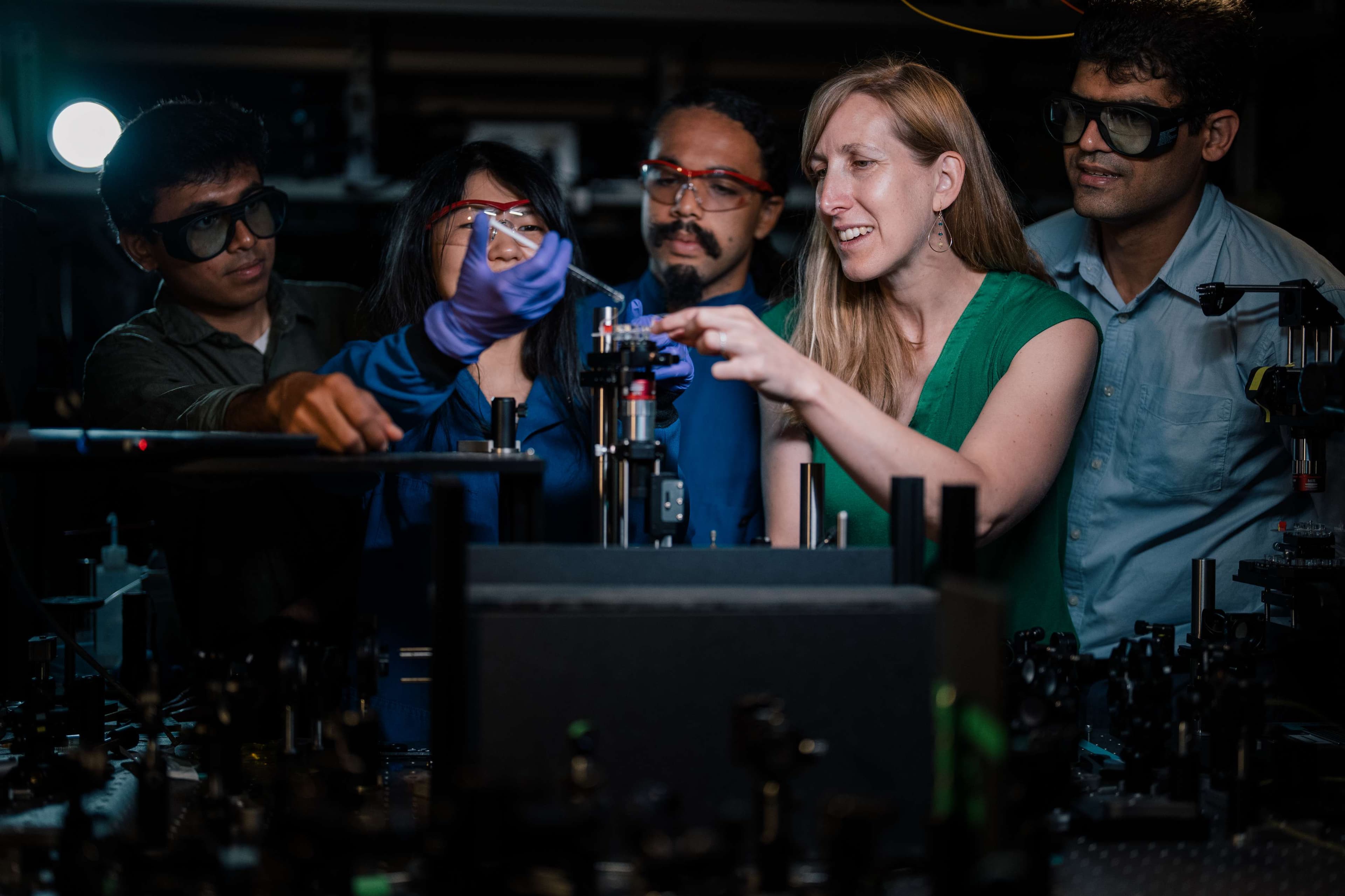
Jennifer Dionne, second from right, and members of her lab (from left) Varun Dolia, Yirui Zhang, Liam Herndon, and Sajjad Abdollahramezani, 2023. The team uses a home-built microscope setup for rapid detection of respiratory pathogens and bacteria. Their innovative method capitalizes on ultra-densely patterned silicon sensors (over 5 million per square centimeter) and acoustic bioprinting of surface chemistry to realize highly multiplexed, molecular-to-cellular detection at the point of care. | Christophe Wu/School of Engineering.
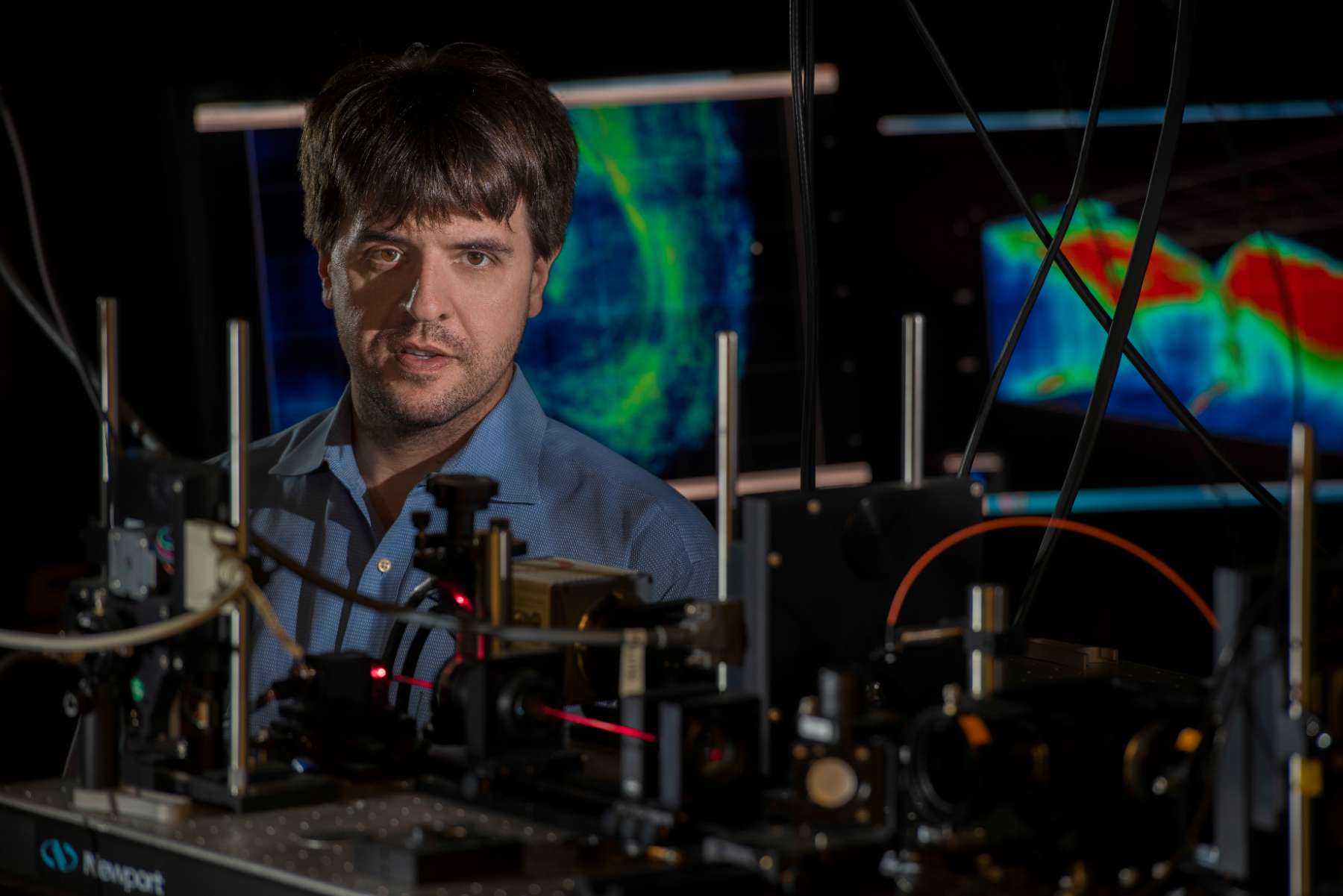
Karl Deisseroth, professor of bioengineering, 2017. In 2005, Deisseroth announced a novel way of activating individual genes in neurons using light. The technique, called optogenetics, allowed for new insights into animal behavior and the nervous system. He later developed a technique called CLARITY that revealed the brain’s structures in incredible detail. | Steve Fisch, Stanford School of Medicine.
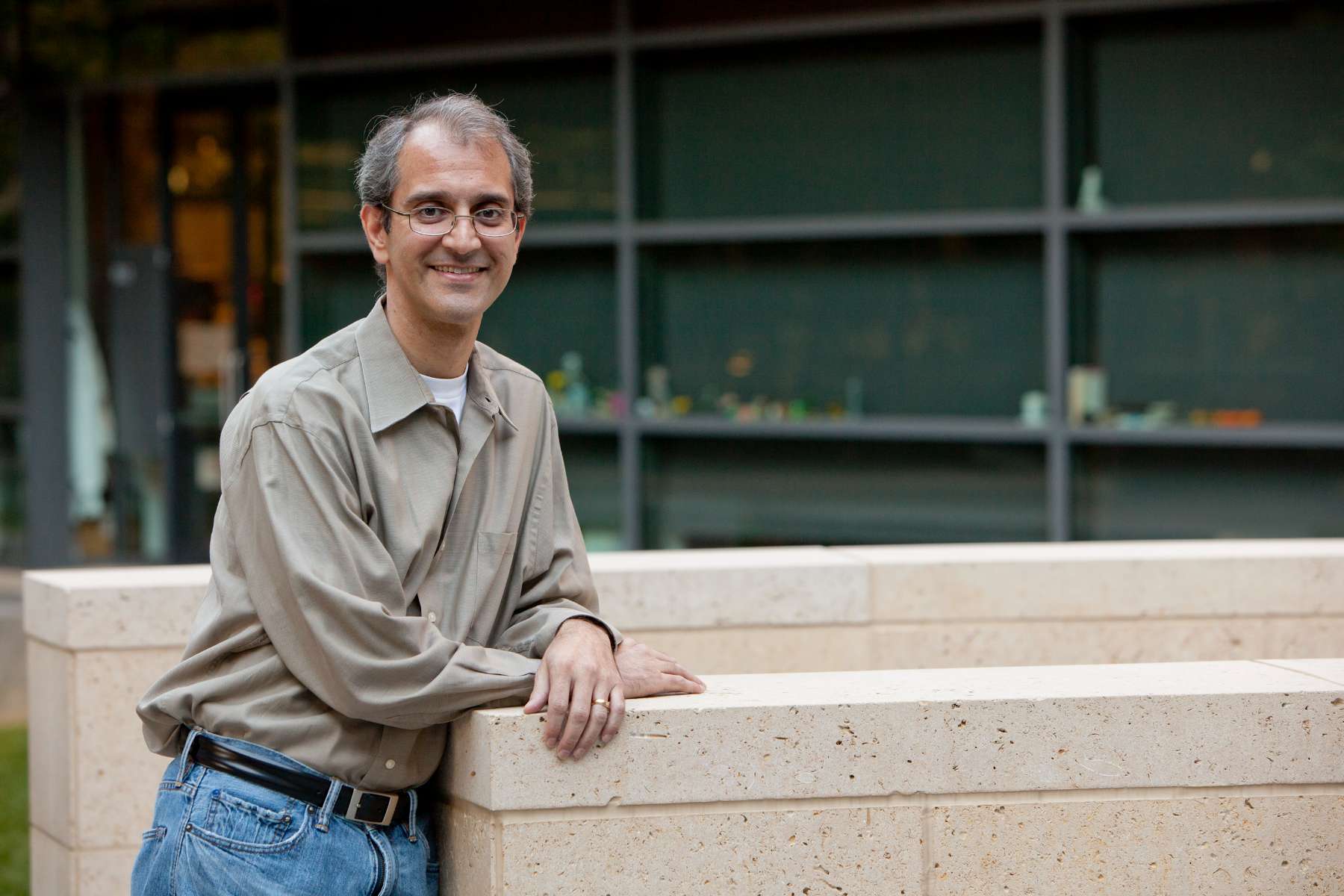
Krishna Shenoy, professor of electrical engineering, 2012. Shenoy and his collaborators developed brain-computer interface technologies using implanted microchips and algorithms that interpreted neural signals. Their work led to advances enabling paralyzed people to move a computer cursor and, years later, to “type” with their thoughts. | Joel Simon/Shenoy Lab.
A new dean
In October 2013, Jim Plummer announced that he would step down as dean the following summer, ending the longest-serving tenure of any dean in the School of Engineering at just a few months shy of fifteen years. Plummer led the school through an era defined by the term “interdisciplinary,” best exemplified by the creation of an entirely new department, bioengineering, and the Hasso Plattner Institute of Design (the d.school). Another notable milestone of Plummer’s deanship was the launch of the Global Climate and Energy Project (GCEP), which, supported by industry partnerships, ran from 2003 to 2018 and significantly advanced research in renewable energy, energy efficiency, and carbon capture with the goal of reducing greenhouse gas emissions.
“I have been privileged to serve as dean and to work with some of the best faculty, staff and students in the world, but it is time for me and the School of Engineering to move on,” Plummer said. “Change is good. It is good for people, and it is good for institutions.” (28)
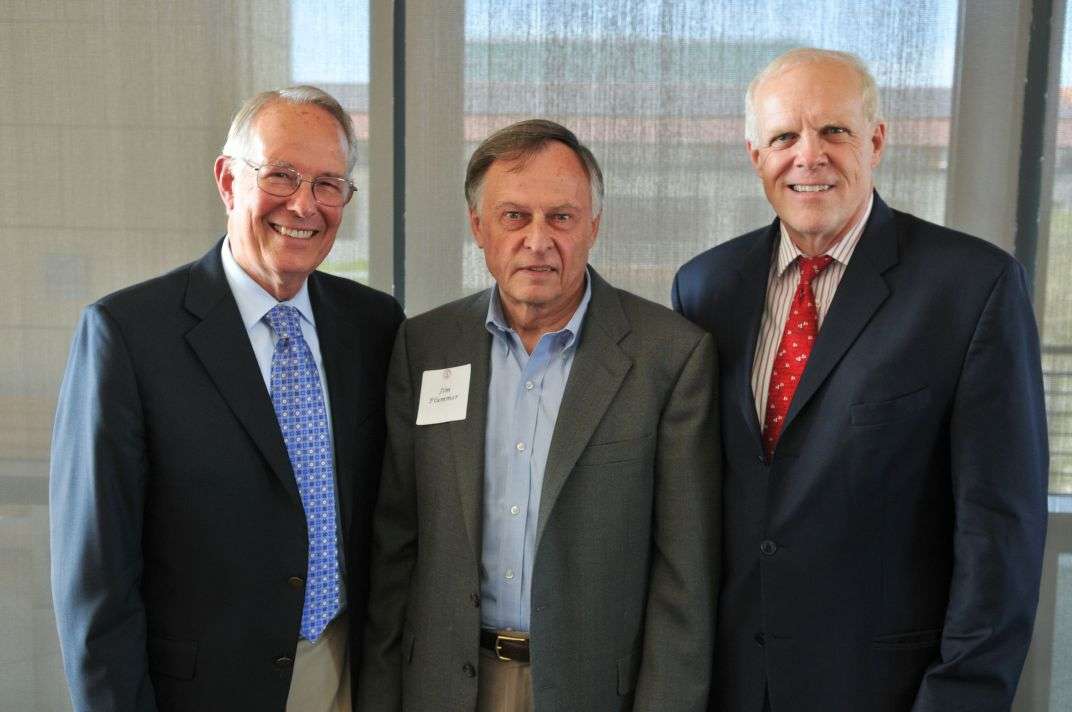
From left to right: James Gibbons, James Plummer, and John Hennessy at Plummer’s farewell party, 2014. Gibbons, Plummer, and Hennessy were each deans of Stanford Engineering. Plummer’s 14-year tenure was defined by achievements that expanded the scholarship of the school and created interdisciplinary connections with other schools. | Rod Searcey.
The following summer, President Hennessy and Provost John Etchemendy identified the next Frederick Emmons Terman Dean of the School of Engineering, Persis Drell, a professor of physics and former director of the SLAC National Accelerator Laboratory. On September 1, 2014, Drell became the first non-engineer and the first female dean in the history of the School of Engineering. She would later become the James and Anna Marie Spilker Professor of Materials Science and Engineering.
“She really epitomizes what we’re looking for as a great scholar in her own right,” Hennessy said of Drell. She brought “a great deal of experience running and encouraging interdisciplinary activities [among] a large group of faculty.” Among her strengths, he said, was her vision of engineering’s future and her “demonstrated ability to shape a vision for the school.” (29)
“I am extremely ambitious for the school,” Drell said. “Engineering at Stanford, in partnership with Silicon Valley, has changed the world. I have no intention of backing away from similar ambition for our future.” (30)
With world-class facilities, new leadership, and a new vision on the horizon, the Stanford School of Engineering was ready for the remarkable decade to come.
Explore more decades
100 Years of Stanford Engineering
A Century of Innovation
The future firmly in sight
Decade 8

Share your Stanford Engineering memories
Be a part of the celebration
As we celebrate the school’s Centennial anniversary, we invite you to mark this milestone by sharing one of your favorite memories of Stanford Engineering. We’d love to hear from you and will be re-sharing selected memories in a variety of ways both publicly and privately throughout the year. Please note: not all submissions will be shared publicly.