Stanford GSB and the School of Engineering: A Shared Century of Innovation
100 years on, each school retains the pioneer mindset that changed the way the professions were taught
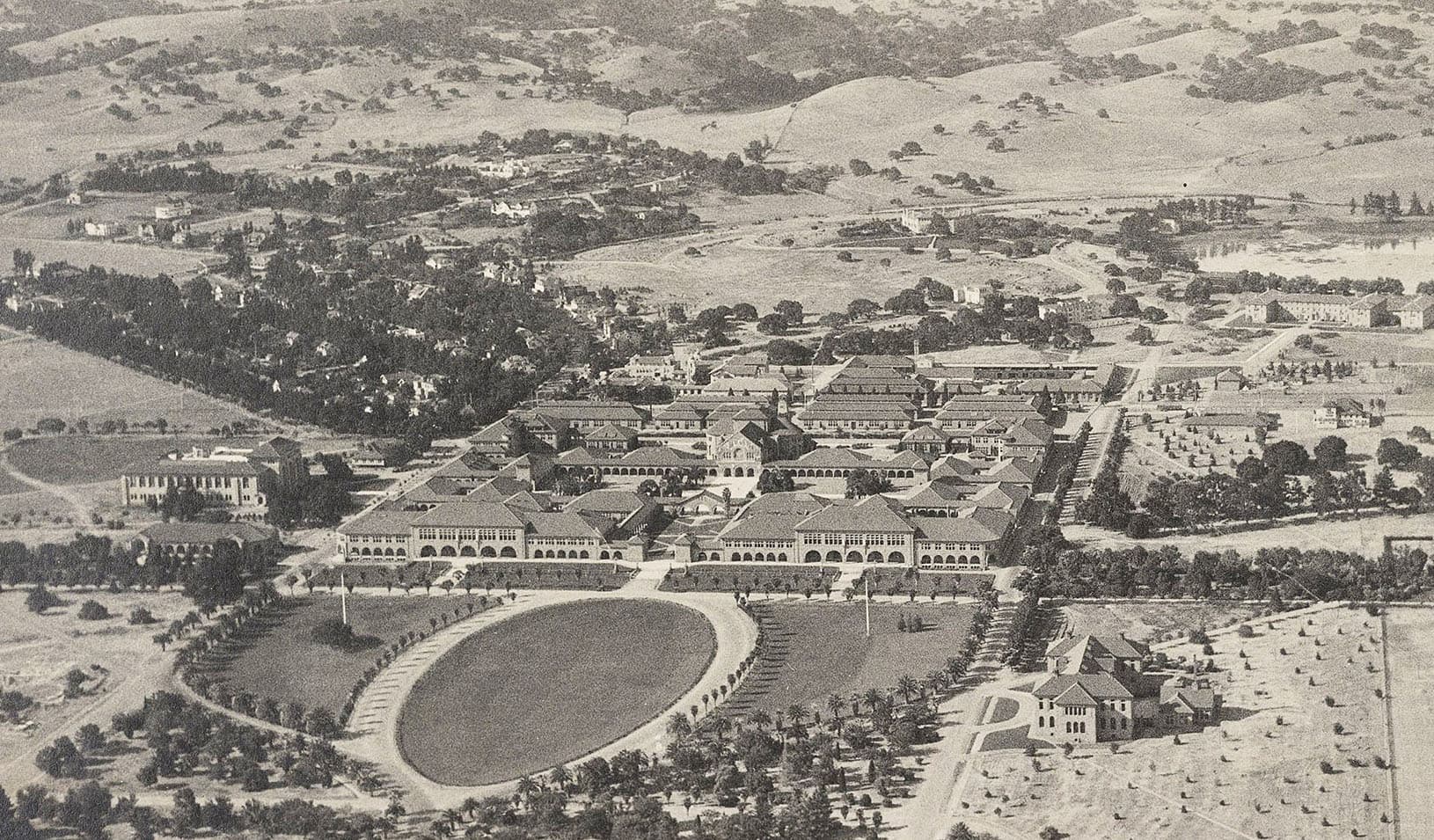
Aerial view of the Stanford campus, facing south, circa 1925. | Berton W. Crandall Photographs, Hoover Institution Library & Archives
By Beth Jensen
As Stanford’s Graduate School of Business and School of Engineering mark their mutual centennials this year, each is celebrating more than their simultaneous 1925 launches. Over their shared history, the two schools have been variously linked through their values, programs, and people. Led from the start by adventurous Californians who shared a taste for challenge and risk, both schools forged new ways of teaching young leaders and together established complementary cultures of innovation and entrepreneurship that endure to this day.
A pioneering zeal and a desire to build community helped put the region on the map and impacted Stanford’s trajectory, says Charles Eesley, professor of management science and engineering and faculty director of the Stanford Technology Ventures Program. “I think that’s what forms the cornerstone of the entrepreneurial mindset around Silicon Valley, which really distinguishes it from a lot of other places,” he says. “The magic of Stanford and Silicon Valley is that so many alums from both the GSB and the School of Engineering want to help the next generation, either within their own companies, by helping them start their own firms, or by coming back into our classrooms.”
The magic of Stanford and Silicon Valley is that so many alums from both the GSB and the School of Engineering want to help the next generation, either within their own companies, by helping them start their own firms, or by coming back into our classrooms."
— Charles Eesley, Professor of Management Science and Engineering and Faculty Director of the Stanford Technology Ventures Program
Among those alumni is YouTube CEO Neal Mohan (BS ’96, MBA ’05), who returned to Stanford GSB for his MBA seven years after receiving his undergraduate degree in electrical engineering.
“I was lucky to receive a fantastic engineering education at Stanford, and I wanted to augment it with a business education,” he says. “I’m an entrepreneur at heart and was always interested in leading a technology company. That was a big driver behind my desire to go back to business school and particularly to Stanford, because it’s in the heart of Silicon Valley and is a deep research institution that also offers practical business experience and knowledge along with a firm grounding in first principles. In a changing world, those principles are the things that remain constant.”
Stanford students, faculty, and alumni like Mohan are the energy powering the innovation and entrepreneurship that has flourished at each school for decades, says Stefanos Zenios, the Investment Group of Santa Barbara Professor of Entrepreneurship and Professor of Operations, Information & Technology, who also serves as faculty director of Stanford GSB’s Center for Entrepreneurial Studies.
I was lucky to receive a fantastic engineering education at Stanford, and I wanted to augment it with a business education...."
— YouTube CEO Neal Mohan (BS ’96, MBA ’05)
“Stanford is a research institution, and one of the main goals of research is to generate knowledge that improves overall social welfare,” he says. “We take that knowledge and train students, who then take it out into the world and apply it. Oftentimes, they do so by turning that knowledge into commercially viable ventures. Many times, they then take what they’ve learned through that process and bring it back to us, talking to our faculty and in our classes. This fuels our investment in further research and educational programs so that the next generation of students is even more educated about new ventures and can tap into a broader research ecosystem.”
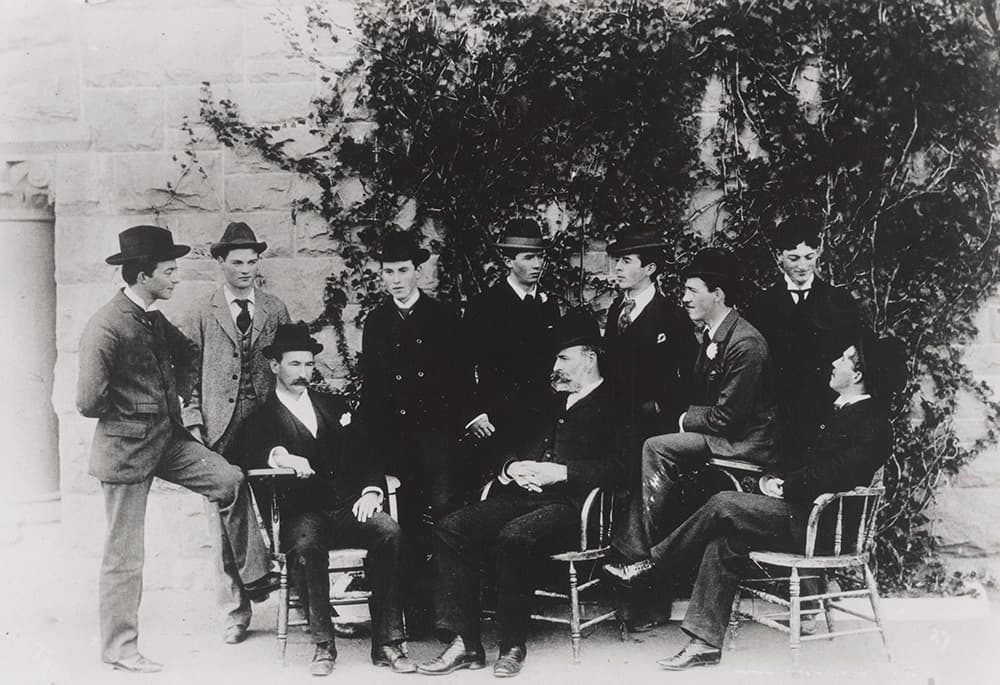
Herbert Hoover (second from left) was a key figure in the founding of Stanford GSB. | GSB Archives
A Shared History
In 1925, California seemed like a place and a time where anything was possible.
Only seven years after the armistice that ended World War I, the state was in the midst of great change. Industry — manufacturing, construction, agriculture, and petroleum — was booming, there was a technological revolution, and prosperity was on the rise. California’s surging industries, increasingly vital ports, and growing cities required more professional business managers and industry experts to lead that expansion. Stanford leadership realized the university must help educate this new generation of leaders.
Prior to 1925, Western business students had traveled east for a graduate education, often not returning to the region; Harvard was the only school in the U.S. to offer an MBA. “A graduate School of Business Administration is urgently needed upon the Pacific Coast,” wrote Secretary of Commerce Herbert Hoover (Class of 1895) to a Stanford trustee in 1924.
Hoover devised a decidedly startup solution: pushing for and receiving support from scores of well-placed Pacific Coast businessmen and firms to finance a graduate school of business at Stanford. It would take barely a year for Stanford GSB to open, with its inaugural complement of 16 MBA students and two faculty members operating in two classrooms next to the biology labs on the first floor of Jordan Hall.
At the same time, Stanford President Ray Lyman Wilbur and a select faculty committee chaired by mechanical engineering professor Horatio Ward Stebbins, noting increasing national dissatisfaction with the state of engineering education, decided to pool the university’s individual engineering departments under the umbrella of a single school: the School of Engineering. It would offer both a four-year undergraduate and a two-year graduate degree, and feature a radically new curriculum – one that was broad and included liberal arts electives from all fields.
Designed to help students expand their worldview and better evaluate their aptitude for engineering, it prioritized the creation of a new type of engineer: a highly skilled technical professional equally capable of managing, directing, and — perhaps most important — leading the innovation essential to the nation’s economy.
It was the school’s third dean, Frederick Terman — often called “the father of Silicon Valley” — who was instrumental in forging the close connection between Stanford Engineering and industry, transforming Stanford from a regional university into a global innovation hub. Terman urged his engineering students to apply their research to real-world problems and launch startups. Notably, he mentored William Hewlett (BA ’34, MS Electrical Engineering ’39) and David Packard (BA ’34, MS Electrical Engineering ’39), helping them found Hewlett-Packard (HP) in a Palo Alto garage and locate their business in the new Stanford Industrial Park — an early foundation of Silicon Valley’s startup culture.

Frederick Terman became head of the Department of Electrical Engineering in 1937. He served as dean of the School of Engineering from 1944 to 1958 and as provost of the university from 1955 to 1965. | Special Collections & University Archives, Stanford University Libraries
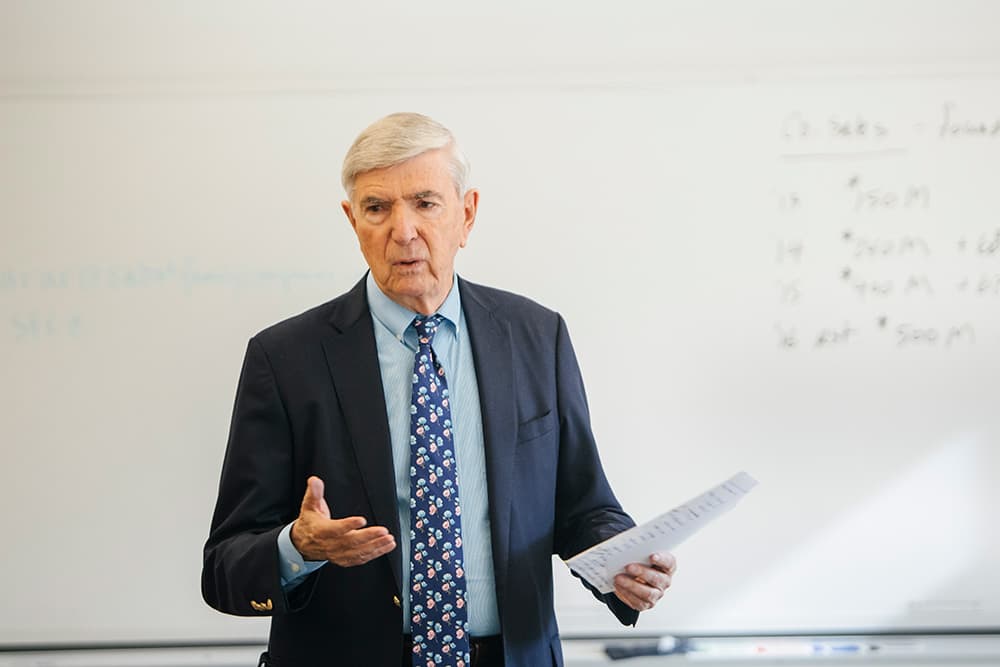
Stanford GSB Professor H. Irving Grousbeck — shown here teaching a management class in 2018 — was instrumental in bringing technology and engineering practitioners into the classroom as part of a co-teaching model. | Elena Zhukova
The business school also focused on educating future leaders of industry, many of whom would face new challenges spawned by California’s booming economy. “The Western portion of the United States has business problems in many ways unlike those in other parts of the country,” wrote Wilbur in the 1925 report of the president. “The position of Stanford University in the intellectual life of the nation gives it a favorable setting in which to develop on the Pacific Coast an effective program of advanced business education and research.”
In the 1930s, Dean Jacob Hugh Jackson brought business leaders into Stanford GSB as lecturers and advisors, sharing industry knowledge with students in collaboration with professors teaching foundational business elements informed by faculty research. The model was further honed in the 1990s under the stewardship of H. Irving Grousbeck, the MBA Class of 1980 Adjunct Professor of Management. Grousbeck developed an entrepreneurship curriculum, and along with Charles Holloway, the Kleiner Perkins Caufield & Byers Professor of Management, Emeritus, created a co-teaching model that brought together faculty and practitioners in the same classroom — many of whom had technology and engineering backgrounds themselves.
Thus over the course of the century — through the Depression, wartime, the rise of Silicon Valley, and a global pandemic — the two schools would find common ground and connection, thanks in part to the thirst for innovation that was integral to the founding of the university itself, says Eesley.
“Bill Miller, in writing the history of Silicon Valley, traced the entrepreneurial mindset at both Stanford and Silicon Valley to the fact that the people who founded the university were pioneers, and had the characteristics of pioneers,” he said, referencing his former colleague, the respected Stanford provost, entrepreneur, and Silicon Valley scholar. “They were adventurous and willing to take risks in search of reward.”
Sowing the Seeds of Entrepreneurship
That same entrepreneurial mindset — along with his dual background in engineering and business — has been key to Neal Mohan’s success, he says. “YouTube is fundamentally a technology company, where I have to make product and strategy decisions rooted in deep technological knowledge, and collaborate at the cutting edge of AI, the mobile ecosystem, and the internet,” Mohan states. “But we are, of course, a business, and responsible for an enormous creator economy. If your aspiration is to be an entrepreneur or a leader in business, having broad cross-disciplinary experience and exposure is critical because the environment today is so dynamic. I draw on that breadth of knowledge with every decision I make and every scenario I face.”
For those desiring a formalized interdisciplinary experience, the two schools have collaborated to offer joint MS/MBA degrees in computer science and electrical engineering. Highly rigorous, the three-year programs require participants to be admitted to both Stanford GSB and the School of Engineering, and most commonly attract students with an undergraduate engineering degree who envision careers in technical management, says Mehran Sahami, the James and Ellenor Chesebrough Professor in the School of Engineering and Tencent Chair of the Computer Science Department, who helped develop the CS/MBA joint degree program that launched in 2014.
“The idea behind the development of the joint programs was that the combination of technical skills and business skills is very powerful, especially here in the heart of Silicon Valley,” Sahami says. “It’s important for people taking leadership roles in the management of technology to understand the details of what that technology can and can’t do. These joint programs provide expertise on both sides.”
The idea behind the development of the joint programs was that the combination of technical skills and business skills is very powerful, especially here in the heart of Silicon Valley..."
— Mehran Sahami, James and Ellenor Chesebrough Professor in the School of Engineering and Tencent Chair of the Computer Science Department
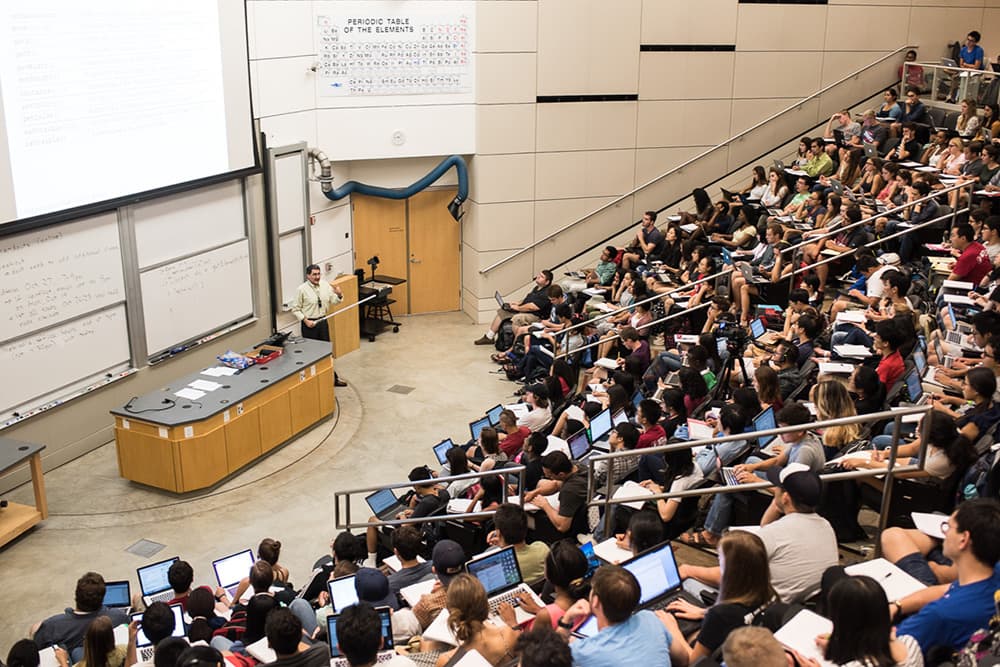
Professor Mehran Sahami teaches a cohort of students in CS106, the very popular introductory to computer science course in Stanford Engineering. | Courtesy of School of Engineering
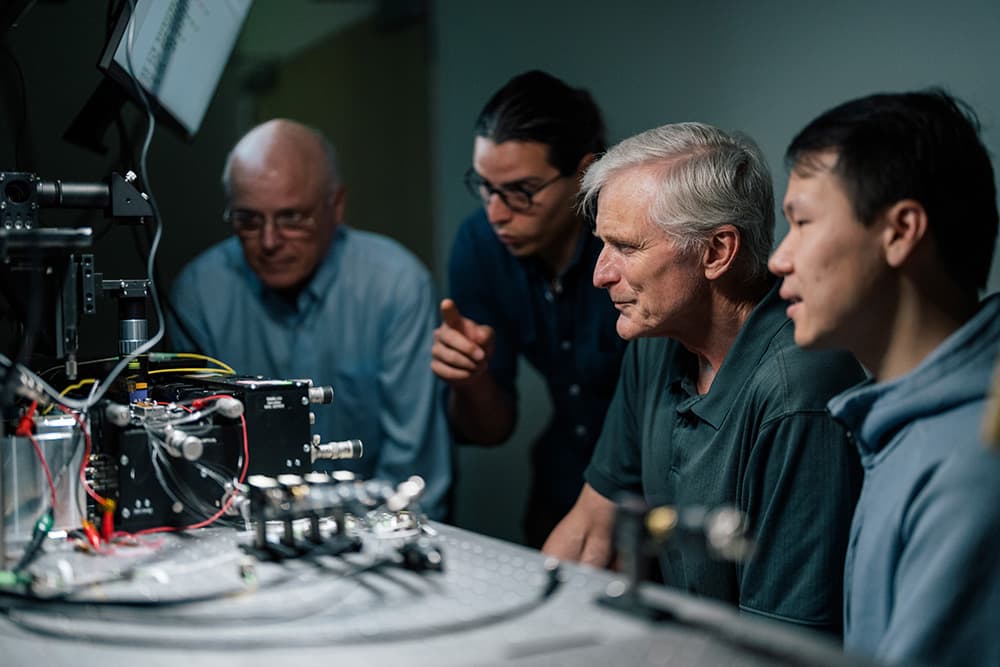
Professor Olav Solgaard and fellow researchers develop photonic sensors and sensor platforms with applications in communication, environmental monitoring, imaging, and optical manipulation. Solgaard helped establish the joint Electrical Engineering and Business degree program in 2013. | Courtesy of School of Engineering
The establishment of the joint degree programs has strengthened the relationship between the two schools, says Olav Solgaard, the Robert L. and Audrey S. Hancock Professor in the School of Engineering, who was director of graduate studies for the Department of Electrical Engineering when the dual degree was established in 2013.
“The connection between the business and engineering world is a natural one, and one that’s grown stronger here at Stanford with this joint degree collaboration,” he says. “It might seem as if people in electrical engineering are very different from those in the business school, but those mindsets fit together very well, and having both those backgrounds creates something very unique and very much needed. These students can be leaders in a knowledgeable way.”
It might seem as if people in electrical engineering are very different from those in the business school, but those mindsets fit together very well, and having both those backgrounds creates something very unique and very much needed."
— Olav Solgaard, the Robert L. and Audrey S. Hancock Professor in the School of Engineering, who was director of graduate studies for the Department of Electrical Engineering when the dual degree was established in 2013
Megan Fazio (MBA ’17, MS ’18 Eng), a product manager at Google working on Google Lens, graduated from Harvard University in 2013 with an undergraduate degree in electrical engineering and computer science. She worked for two years as a hardware engineer at NASA’s Jet Propulsion Laboratory before deciding she wanted to deepen her technical knowledge.
“When I learned about the joint program at Stanford, it clicked with me,” she says. “It felt like the perfect bridge between the technical problem-solving I love and the leadership and organizational challenges I wanted to take on. Professionally, it’s been transformative. In my work now, I sit at the intersection of engineering, design, and business strategy every day. My engineering background allows me to communicate effectively with technical teams and deeply understand the underlying technology in our products. My business education helps me connect those technical capabilities to user needs and our broader company and organizational strategy. I’ve also learned how to navigate ambiguity and lead through collaboration. The joint program brought all of that together.”
When I learned about the joint program at Stanford, it clicked with me,” she says. “It felt like the perfect bridge between the technical problem-solving I love and the leadership and organizational challenges I wanted to take on. Professionally, it’s been transformative. In my work now, I sit at the intersection of engineering, design, and business strategy every day."
— Megan Fazio, MBA ’17, MS ’18 Eng
An Interdisciplinary Approach
At the GSB’s Center for Social Innovation, director Matthew Nash sees a growing number of students intrigued by the intersection of engineering, business, and social/environmental issues.
“Both the GSB and the School of Engineering are fundamentally about solving important problems,” he says. “Engineering students have an interest in design, the problem-solving process, and in engineering better products, and a growing number of business students are interested in using the tools of business — marketing, strategy, operations — to solve important problems that go beyond the traditional commercial business-type problems.”
Resources range from major academic centers, including Stanford Technology Ventures Program (STVP), the Center for Entrepreneurial Studies (CES), and the Center for Social Innovation (CSI) to programs including Stanford Venture Studio, Stanford d.school, the Botha Chan Innovation Program, the Impact Design Immersion Fellowship, and the Mayfield Fellows program.
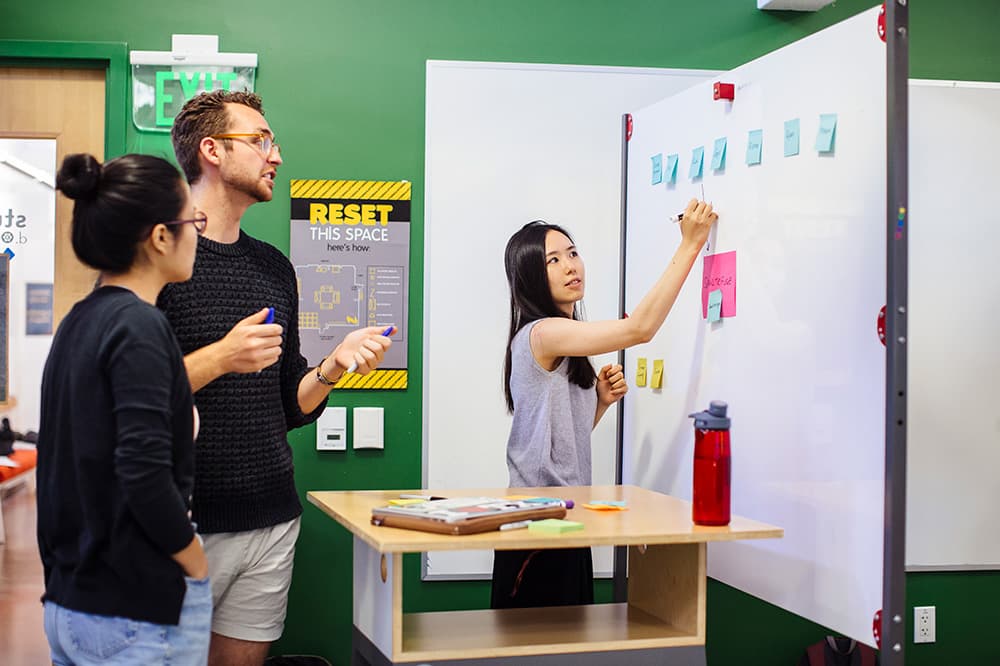
Students participating in Design for Extreme Affordability, a two-quarter interdisciplinary course that helps solve real-world issues, offered by the Stanford d.school. | Elena Zhukova
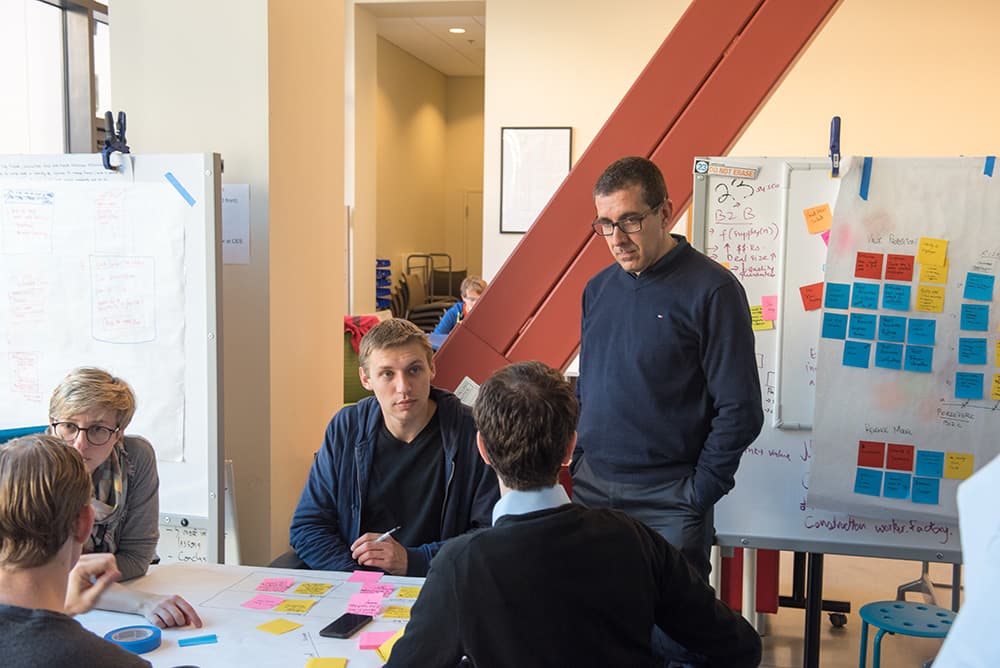
Professor Stefanos Zenios with students in 2016 in Startup Garage, a hands-on course that empowers students to test and develop concepts with practical impact. | GSB Archives
Students can also participate in dozens of cross-disciplinary courses, including Formation of New Ventures, a case-based course where faculty and successful entrepreneurs teach students about the myriad issues faced by all new founders; Design for Extreme Affordability, a two-quarter course bringing together students from across disciplines to work with social sector partners and vulnerable communities on real-world problems; and Startup Garage, an intensive and hands-on course taught by expert faculty and seasoned advisors allowing student teams to design and test new business concepts addressing real-world needs. Among the companies created in Startup Garage are DoorDash, Zum, and Gold Leaf Farming.
“At the end of the day, these courses and programs are all designed to teach an entrepreneurial mindset that will help our students succeed whether they go on to start ventures, join new or growing ventures, or join mature companies, because even mature companies need to transform and evolve,” says CES faculty director Stefanos Zenios. “This is an ecosystem of entrepreneurship programs, all of which encourage us to talk with each other and learn from each other.”
Entrepreneurship centers such as STVP — which conducts interdisciplinary research on technology entrepreneurship and innovation, and provides classes and networking for students from all disciplines — play an important role in encouraging that cross-disciplinary approach, says Eesley.
“I think all these collaborations are made possible, at least in part, because there are very low barriers across various departments at Stanford in general, and bringing people together across disciplines and departments is baked into the structure of these programs,” he says. “At STVP, we watch what the CES and GSB are doing, and they watch us. That healthy rivalry pushes all of us to make sure we keep innovating and doing better by the students.”
Business students at Stanford GSB, like their Stanford Engineering counterparts, are increasingly interested in developing the dual business and technical skills required of not just business leaders, but company founders, says Deb Whitman, director of the Center for Entrepreneurial Studies at the business school.
“There is a deep interest in entrepreneurship by students at both the GSB and the School of Engineering,” says Whitman. “It can be particularly powerful when they work together. Both the schools and student clubs frequently test out new ideas to help make that happen. We encourage interested business students to take a class at the School of Engineering to get to know engineering students, and have engineering students doing the same thing here.”
The online Team Formation Hub is a useful resource for finding students with similar entrepreneurial interests and complementary skillsets, says Whitman, as are the multiple team-formation sessions hosted across campus each year and the annual TreeHacks session.
“Our goal is to ensure our entrepreneurially minded alumni leave here having learned how to assess whether an idea for a startup makes sense,” she says. “If they leave here and pick an idea that doesn’t work, they can waste critical years of their careers. We try to send people out the doors having learned from prior entrepreneurs, from investors in this space, and from faculty members who’ve done research in this field, so our alumni will be better prepared to make good decisions if they choose to start a new venture or even to work on new innovations within existing companies.”
Connections to Meet a Changing World
The connections that link the two schools are particularly valuable now, as traditional business practices and roles in Silicon Valley’s tech industry continue to shift, says Mehran Sahami.
“Venture formation in the tech sector has evolved to the point where increasingly the people doing the financing aren’t necessarily coming from traditional finance backgrounds, and some of the people working in tech aren’t coming from traditional tech backgrounds,” he says. “Here at Stanford, we have world-class programs among several disciplines, and an ability to combine them together to provide new insights and new directions forward. It’s a combination of skills coming together, and it’s a powerful thing that’s endemic to Stanford.”
The pioneering mindset of innovation and problem-solving that launched each school a century ago — and their growing network of connections — is perhaps more relevant today than ever before, says Fazio.
“We’re at a point where technology and society are deeply intertwined, and the world’s biggest challenges – from AI ethics to climate technology – don’t belong to a single discipline,” she says. “Regardless of what industry or field you are in, understanding both how technology works and why it matters is crucial. Expertise in both engineering and business is what enables leaders to connect innovation with real-world impact. It’s what helps teams make tradeoffs thoughtfully, communicate effectively across disciplines, and build things that are not just technically impressive, but genuinely useful and sustainable.”
Explore more stories
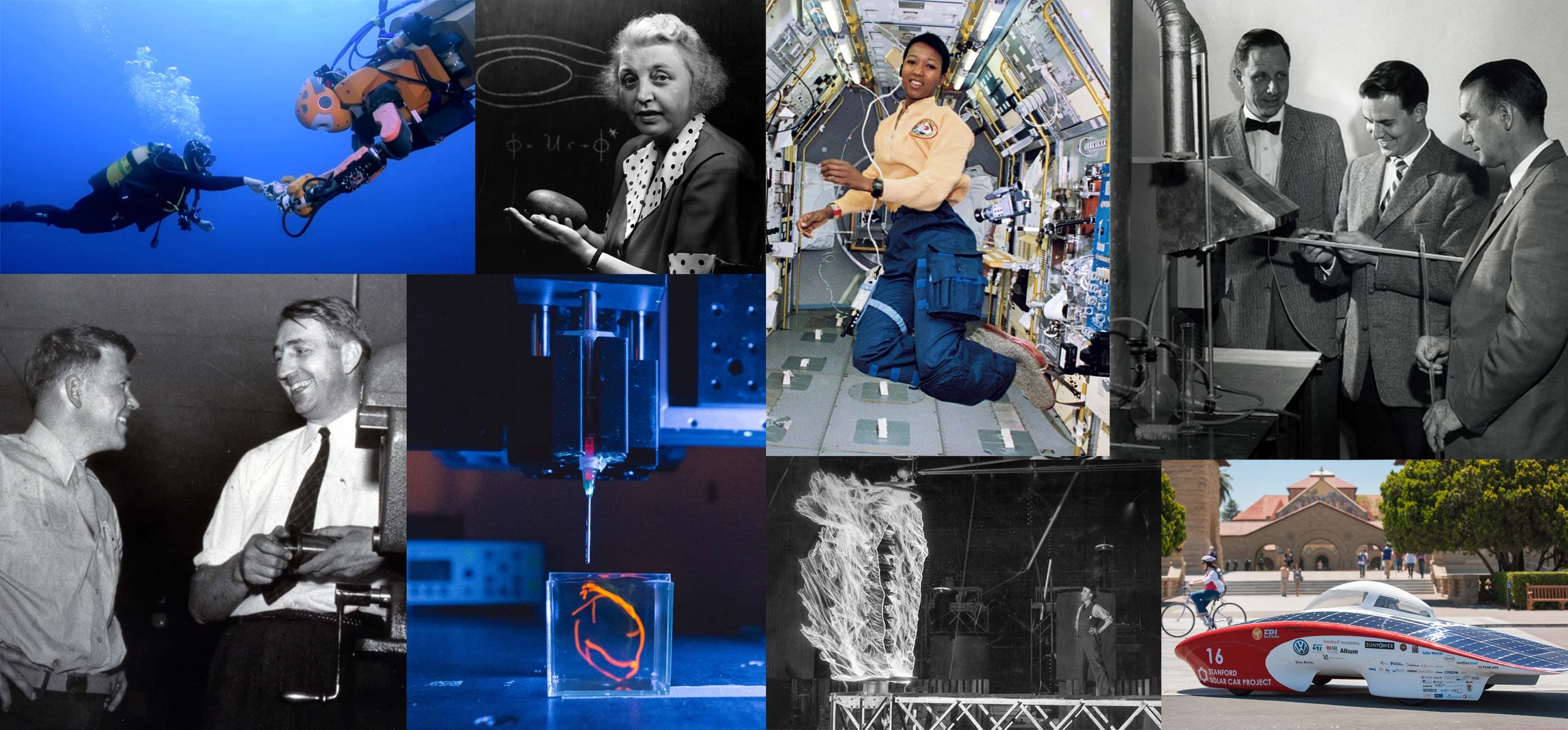
100 Years of Stanford Engineering
A Century of Innovation

Share your Stanford Engineering memories
Be a part of the celebration
As we celebrate the school’s Centennial anniversary, we invite you to mark this milestone by sharing one of your favorite memories of Stanford Engineering. We’d love to hear from you and will be re-sharing selected memories in a variety of ways both publicly and privately throughout the year. Please note: not all submissions will be shared publicly.